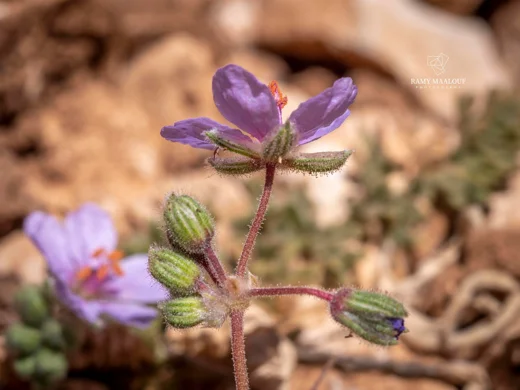
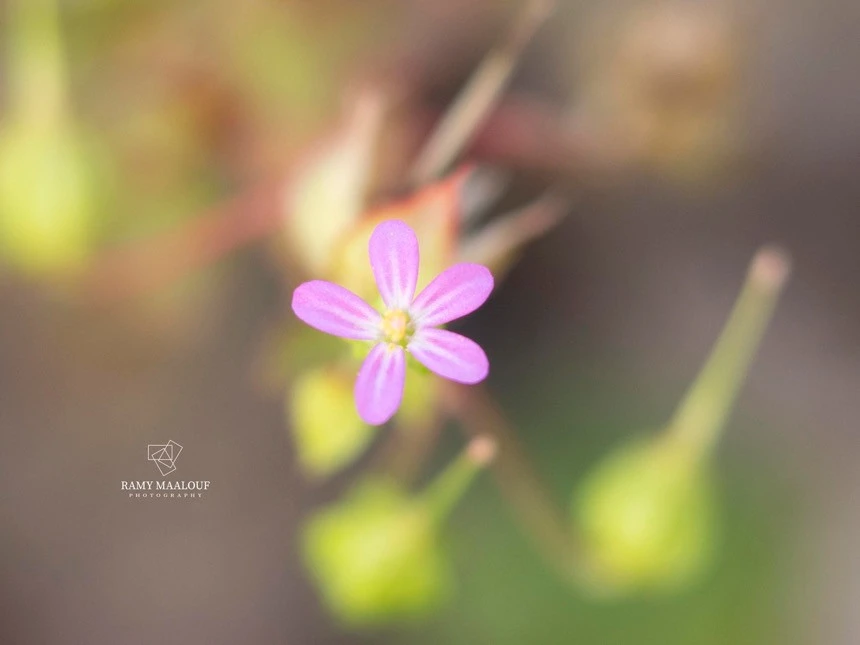
Geranium lucidum
الفصيلة غرنوقية · Geraniaceae
معرض النبات
حقوق الصور وإسنادها
- المصدر · الصورة الأصلية
© Ramy Maalouf 2020 - 2026
- المصدر · الصورة الأصلية
© Ramy Maalouf 2020 - 2026
- المصدر · الصورة الأصلية
© Ramy Maalouf 2020 - 2026
- المصدر · الصورة الأصلية
© Ramy Maalouf 2020 - 2026
الوصف النباتي
- الأوراق
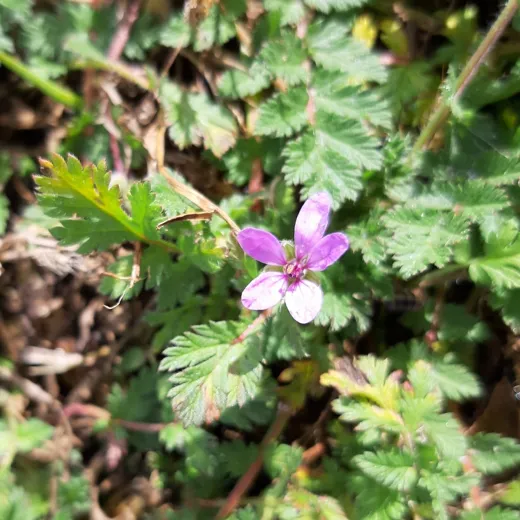
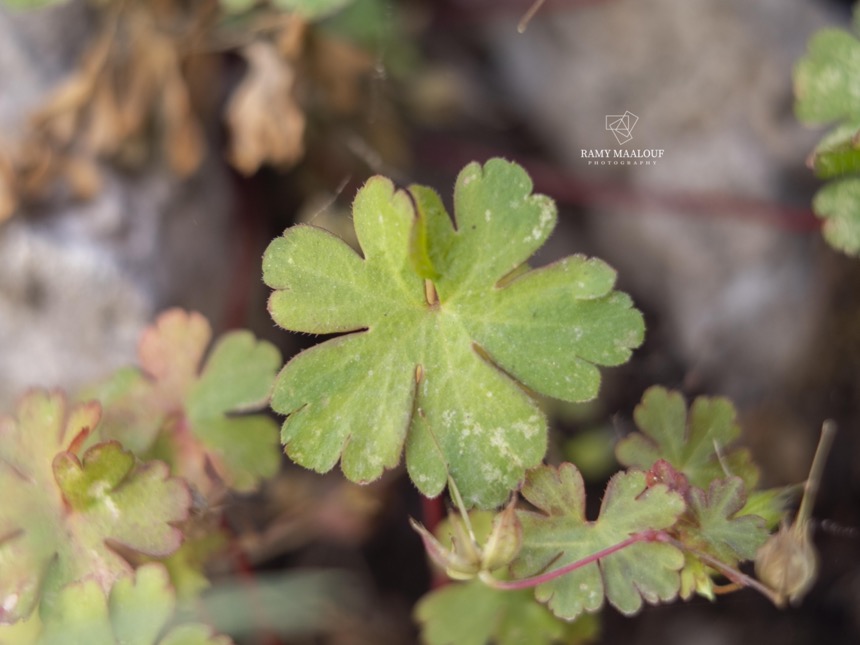
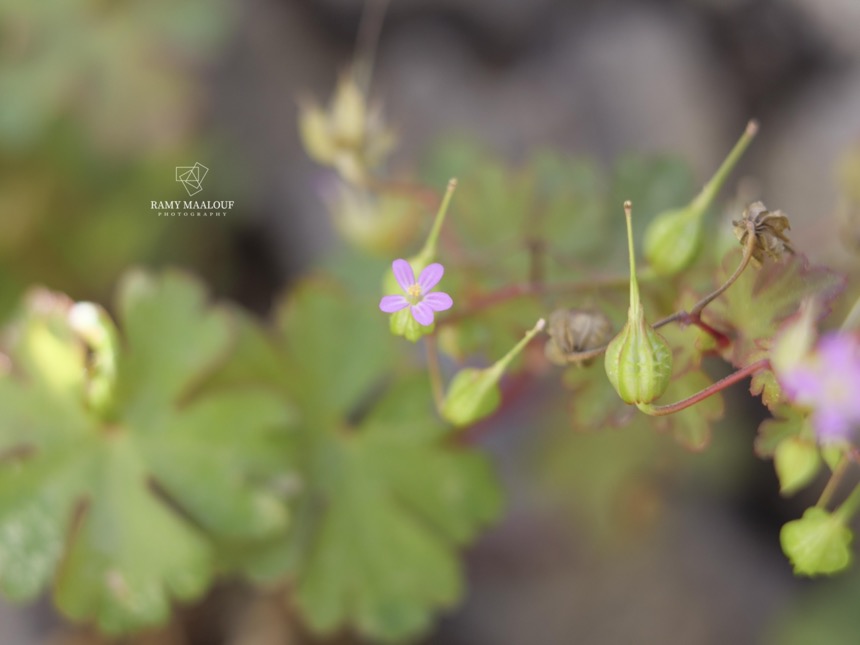
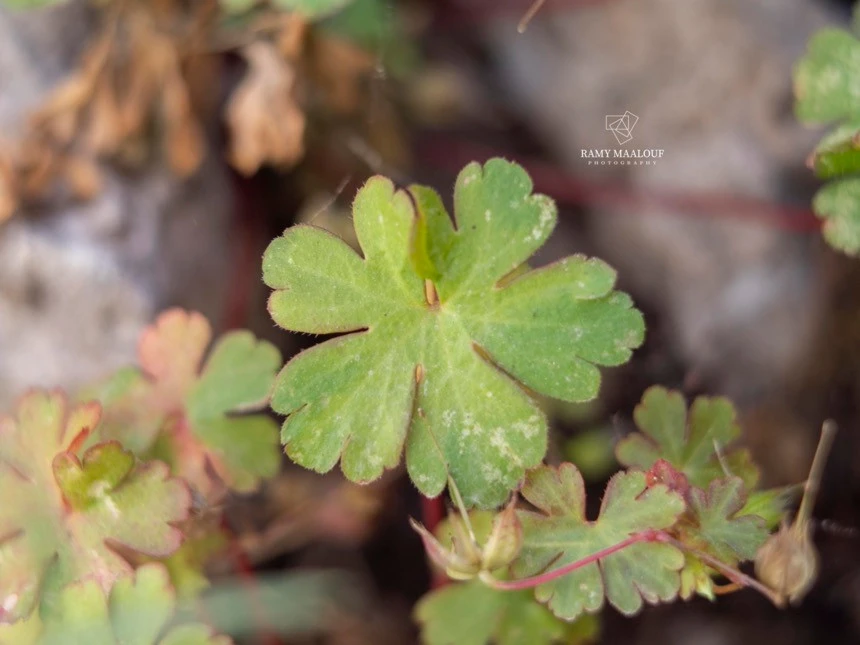
- Leaves : Leaves rounded in outline, slightly fleshy, palmately divided into 5–7 cuneate, obtuse lobes, more or less incised and crenate.
- الأزهار
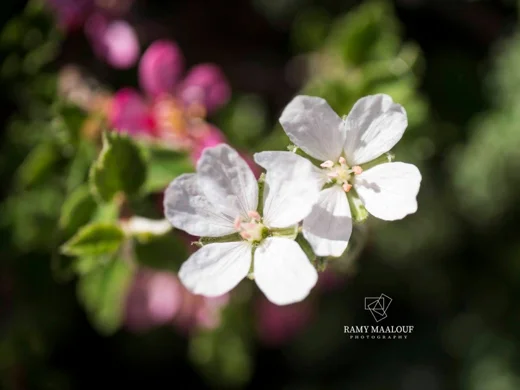
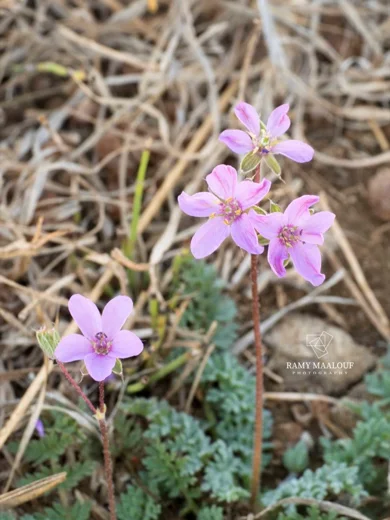
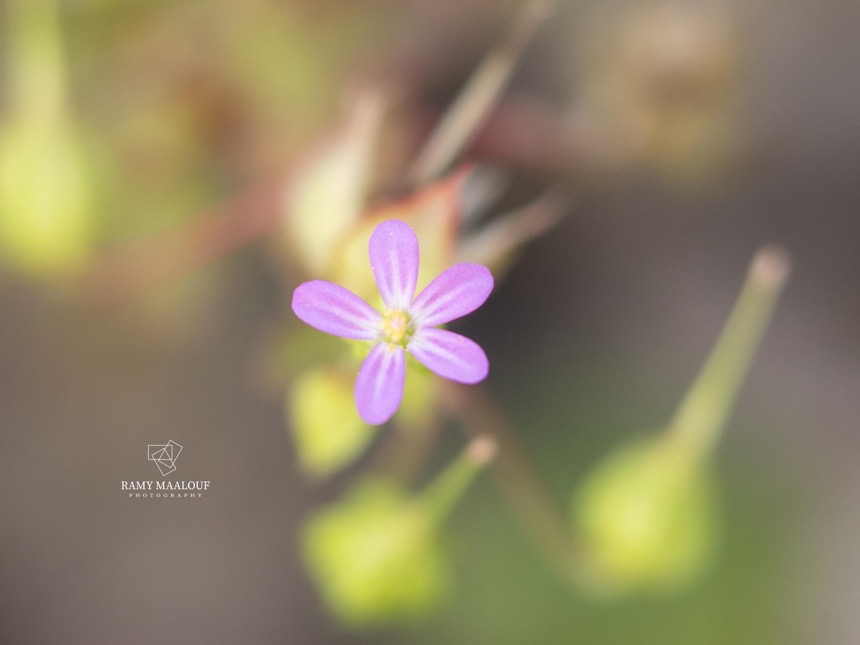
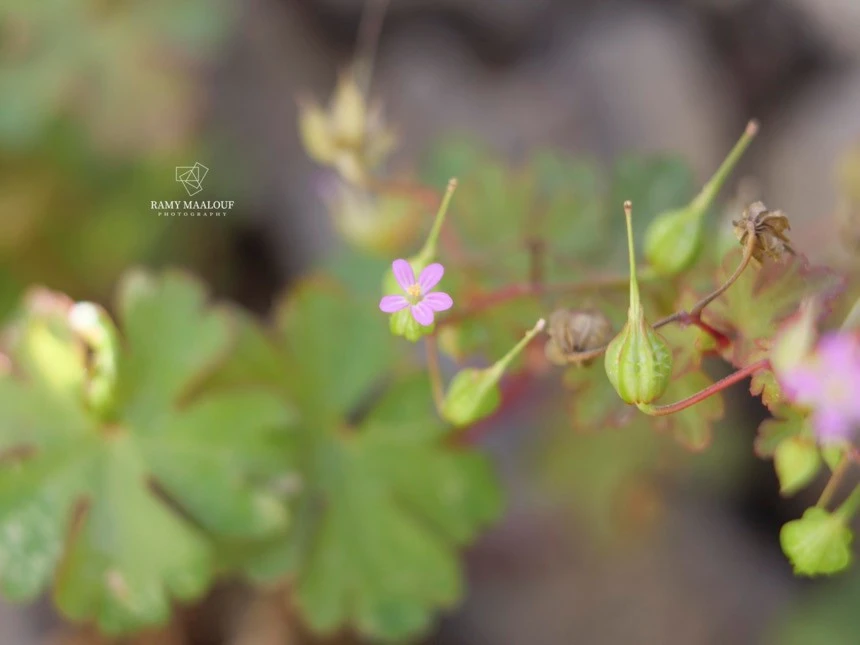
- Inflorescence & flowers : Sepals lanceolate-acuminate, glabrous, marked with transverse wrinkles; petals pale pink, slightly longer than the sepals, with an obovate blade shorter than the claw.
- الثمار والبذور
- Fruit : Fruit 10–13 mm long, glabrous; valves puberulent toward the apex; seeds smooth.
الموائل والبيئة
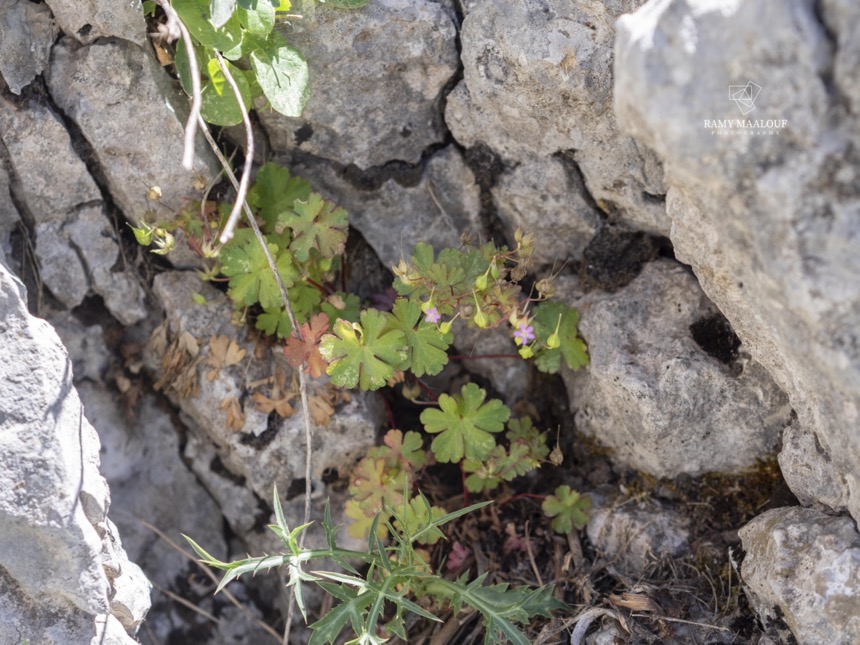
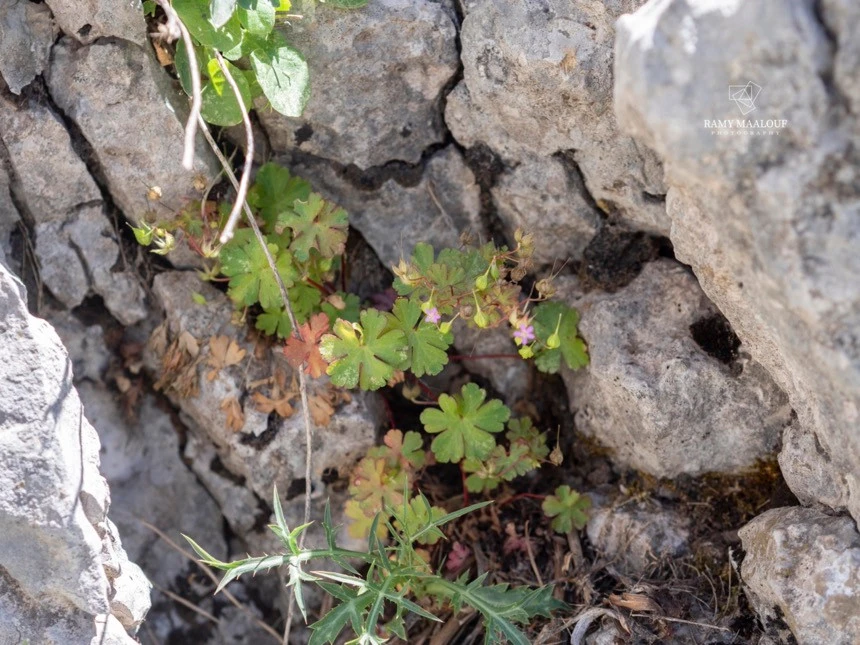
Habitat & elevation : Rocks and shaded places, from the coastal belt to the middle mountain belt, also recorded on Hermon.
مواسم النبات
- الفنلوجية
- Phenology : Flowers from February to May.
الانتشار الموثق
Lebanese distribution : Recorded by Mouterde from Beyrouth, Tripoli, Bikfaya, Tartij, Beit Khachbo, Dlepta, Mohrab, Rayfoun, Hasroun, Hadchit, Qannoubine, the Col de Jezzine to Machghara, Mdeireje, Qamou‘a and Hasbaya.
Native range : Albania, Algeria, Austria, Baleares, Baltic States, Belgium, Bulgaria, Corse, Cyprus, Czechia-Slovakia, Denmark, East Aegean Is., Finland, France, Germany, Great Britain, Greece, Hungary, India, Iran, Iraq, Ireland, Italy, Kriti, Krym, Lebanon-Syria, Libya, Madeira, Morocco, Nepal, North Caucasus, Norway, NW. Balkan Pen., Pakistan, Palestine, Portugal, Romania, Sardegna, Saudi Arabia, Sicilia, South European Russia, Spain, Sweden, Switzerland, Transcaucasus, Tunisia, Turkmenistan, Türkiye, Türkiye-in-Europe, Ukraine, West Himalaya.
Introduced range : British Columbia, California, Oregon, Washington.
لمحة نباتية
- بنية النبات
- Life-form & habit : Annual herb, glabrous, sometimes with rare papillose hairs on the lower surface of the leaves; stems erect or several from the base, branched from the collar, 10–30 cm tall.
- دورة الحياة
- حولية
الفصيلة والتصنيف
- الاسم العلمي المقبول
- Geranium lucidum
- الفصيلة
- غرنوقية