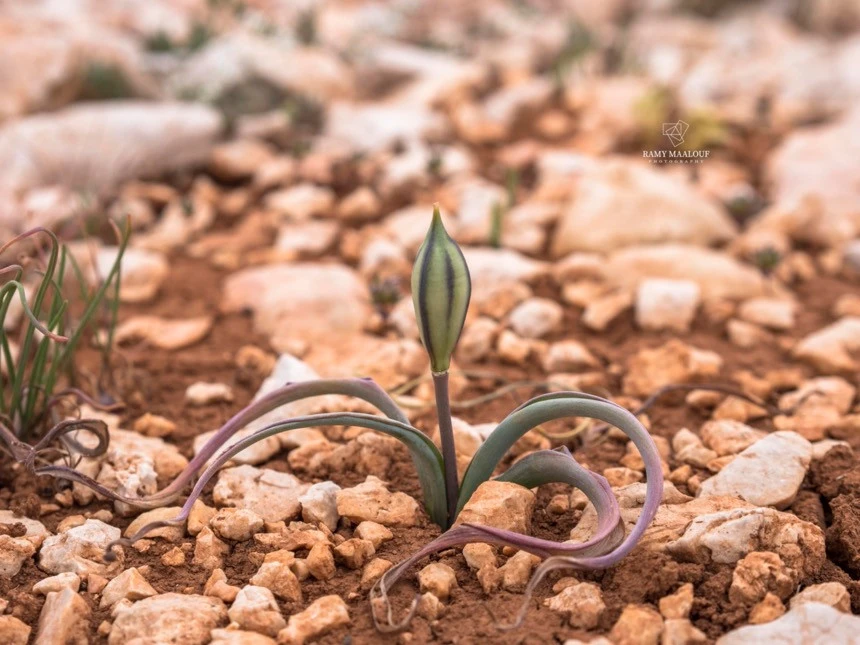
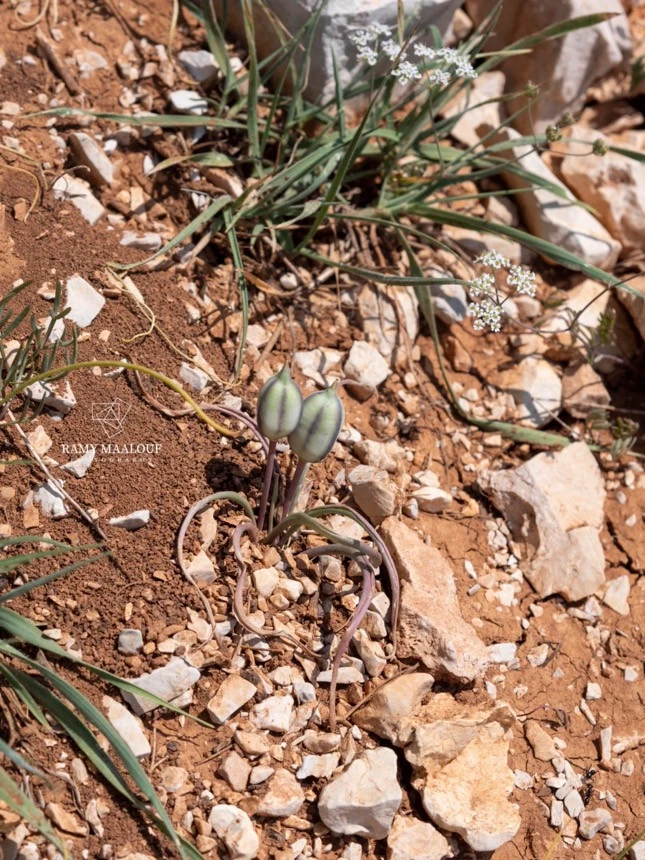
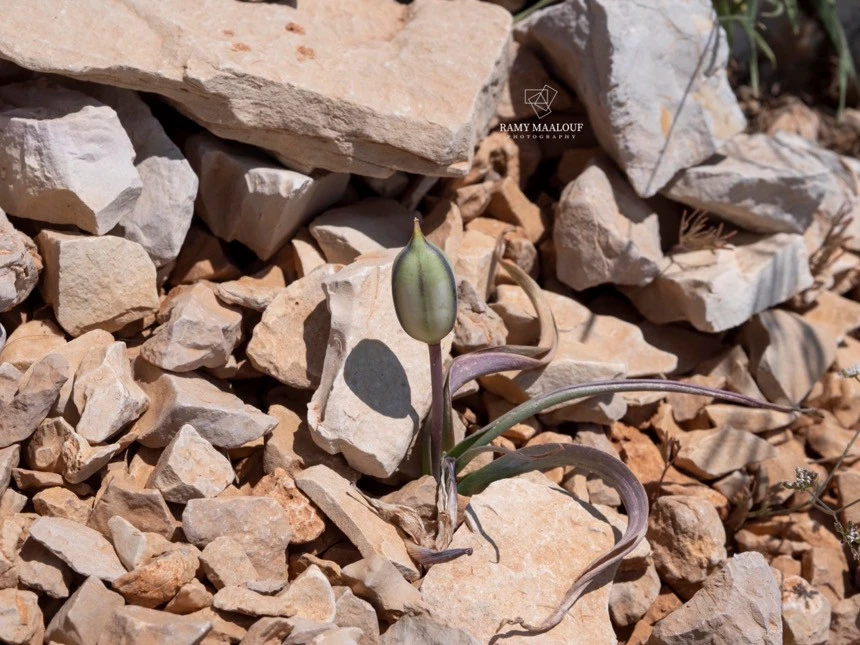
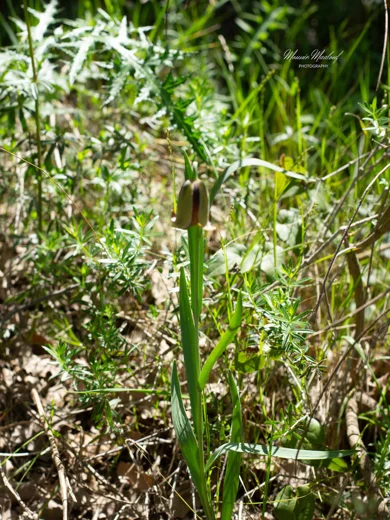
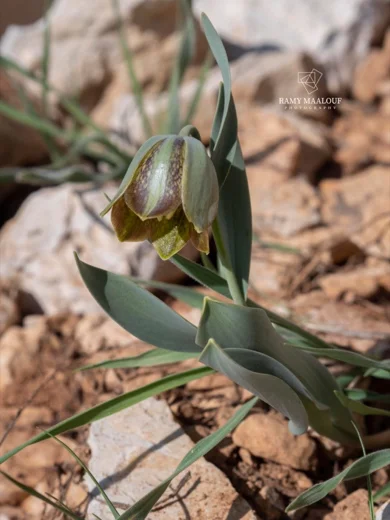
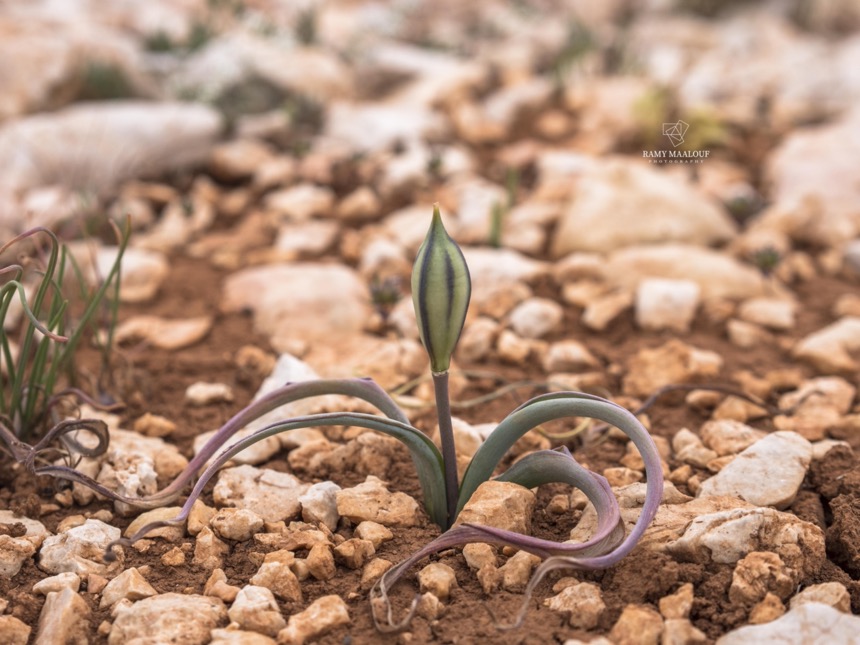
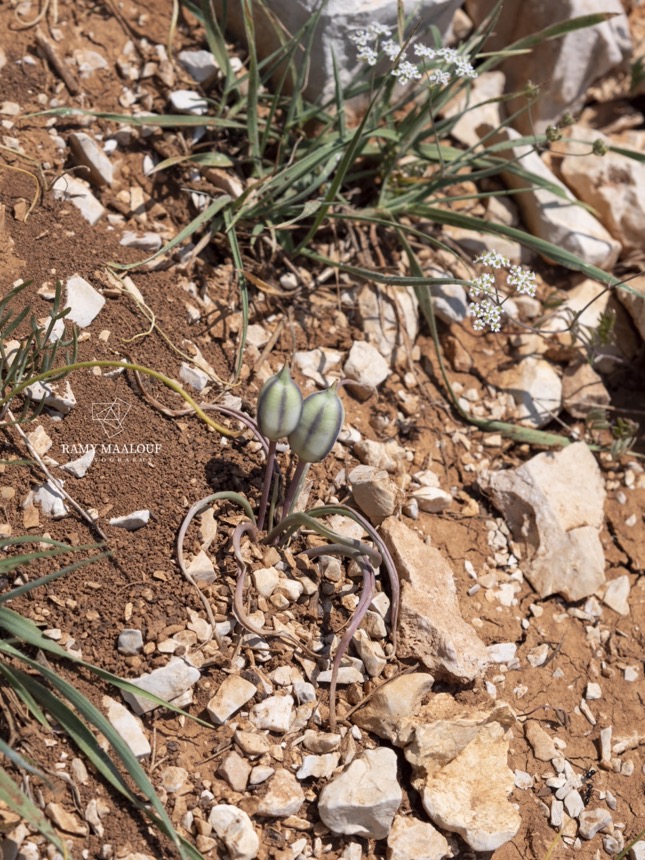
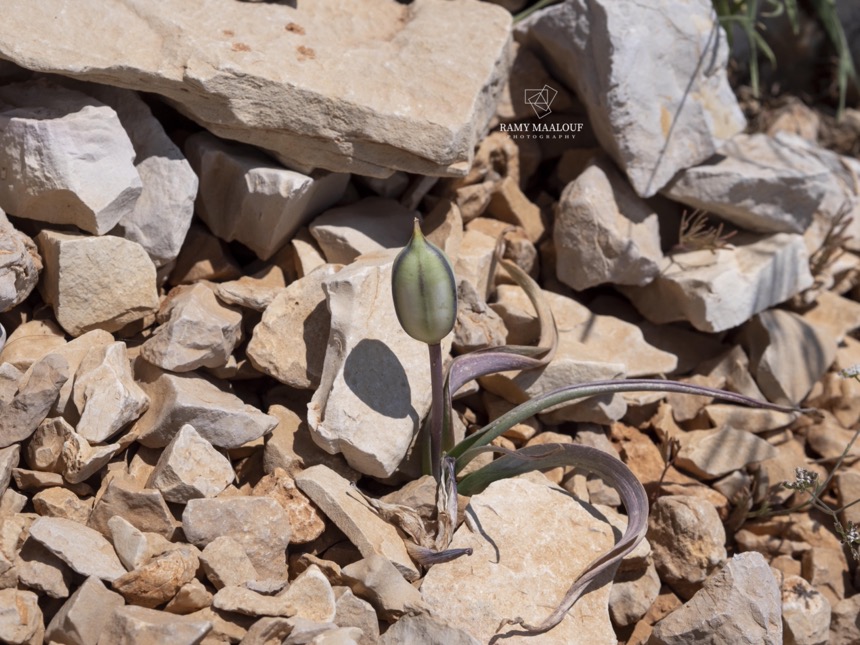
Leaves: Usually three, occasionally two or four, spreading along the ground; narrow, 10–15 cm long, with long-tapering tips, slightly wavy margins and irregularly curved or rolled blades.
الأزهار
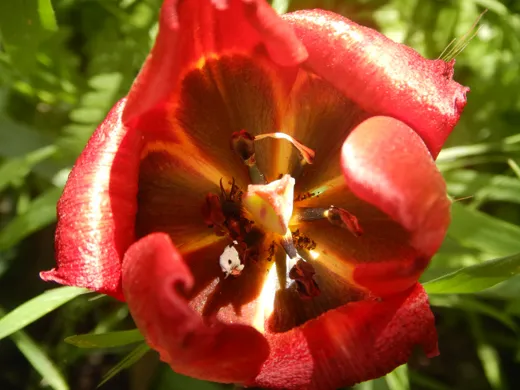
Flowers: Bell-shaped to funnel-shaped. Tepals nearly equal, pointed, 2–3 cm long and a little over 1 cm wide. Outer tepals pale green outside; inner tepals pink-violet outside; all pink-violet inside with yellowish bases. Filaments 12–14 mm long, linear and flattened, with a white beard along the basal 2 mm, otherwise yellowish and glabrous. Anthers brown, ovate-elliptic, about 2 mm long.
الثمار والبذور
Fruit: Ovary tapering into a style with a capitate stigma. Capsule ovate-elliptic, yellowish-white, abruptly ending in a 3 mm point.
الموائل والبيئة
Habitat & elevation: Rocky places in high mountains. Mouterde’s subsp. westii type locality is at 2,700 m on Qornet el Achara.
Lebanese distribution: Jabal Barouk, the Cedars of Barouk, Jabal Sannine, Jourd Hasroun, the upper Makmel, Foumm el Mizhab, Qornet el Achara, the main Lebanon range and Hermon.
Syrian distribution: Above Bloudane, Talaat Moussa and Jabal Abou el Haoua.
Recorded locations: Sannine.
Native range: Afghanistan, Iran, Lebanon-Syria and Türkiye.
الارتفاع الموثق
الارتفاع
2,700 m
لمحة نباتية
بنية النبات
Life-form & habit: Bulb 1–2 cm, rarely 3 cm, in diameter, with reddish-brown tunics slightly hairy at the tip but not woolly. The regional subsp. westii account describes an underground stem 2–7 cm long and a solitary, glabrous flower stalk reaching 8 cm.