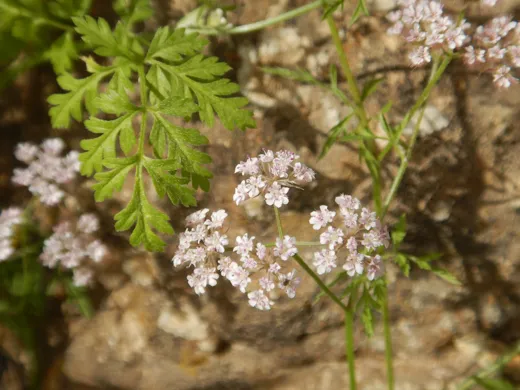
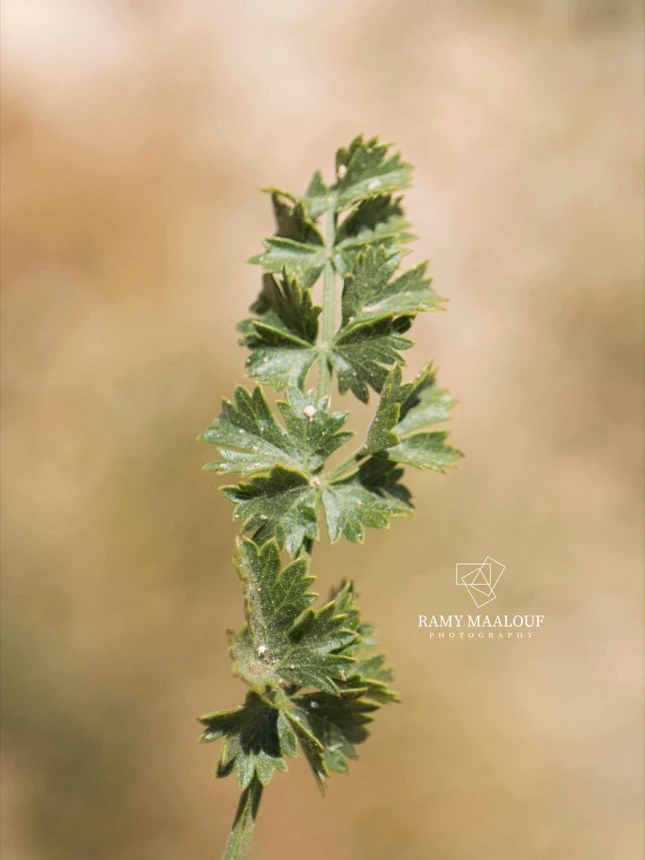
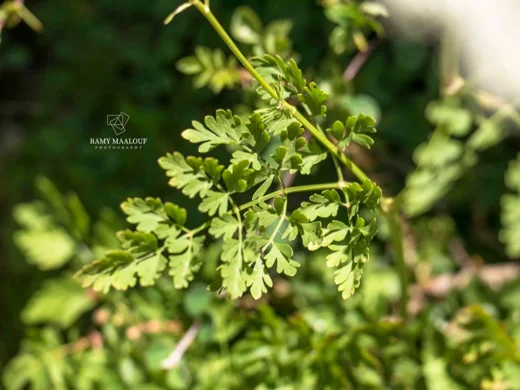
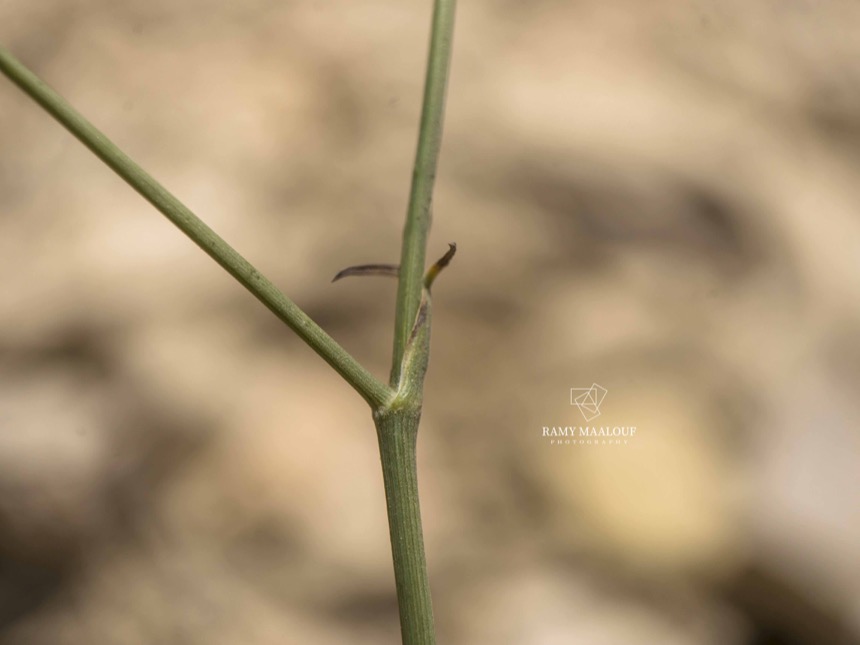
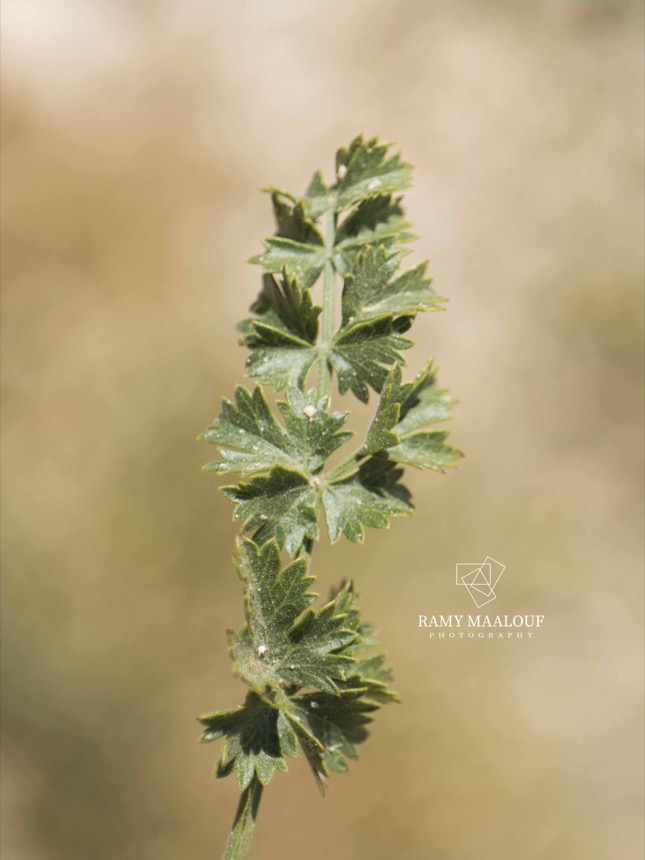
Leaves: Basal leaves pinnate to bipinnate, 5–15 × 3–7 cm, with ovate to oblong leaflets, coarsely toothed or lobed; cauline leaves smaller, 2–3 times pinnate with narrow, linear segments, the uppermost reduced to sheathing bracts. Petioles long, grooved, and expanded at the base.
الأزهار
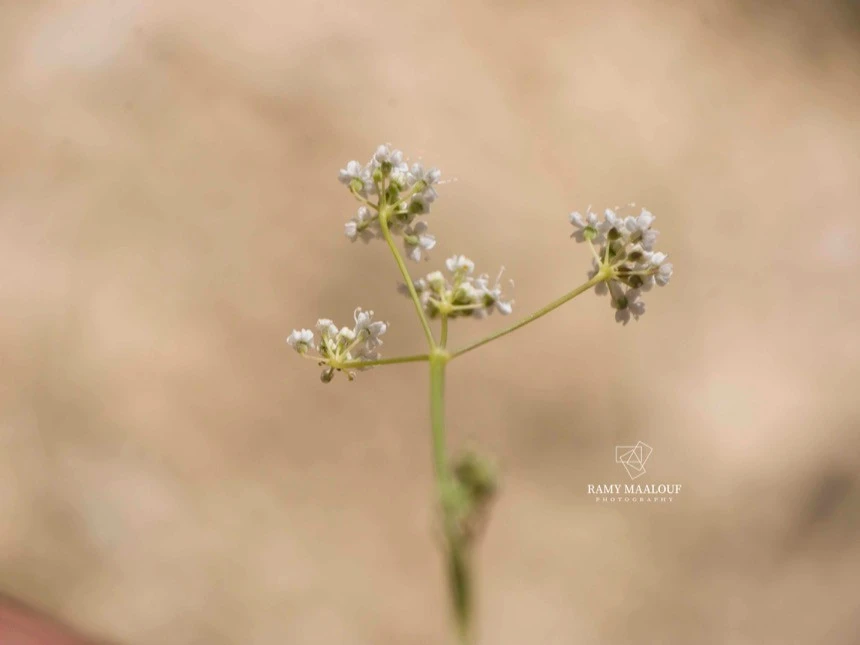
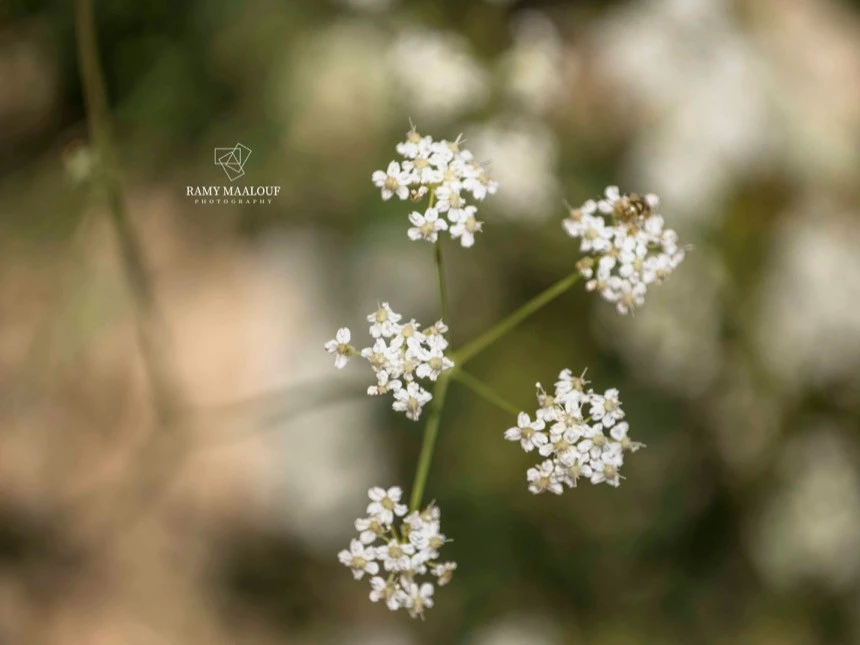
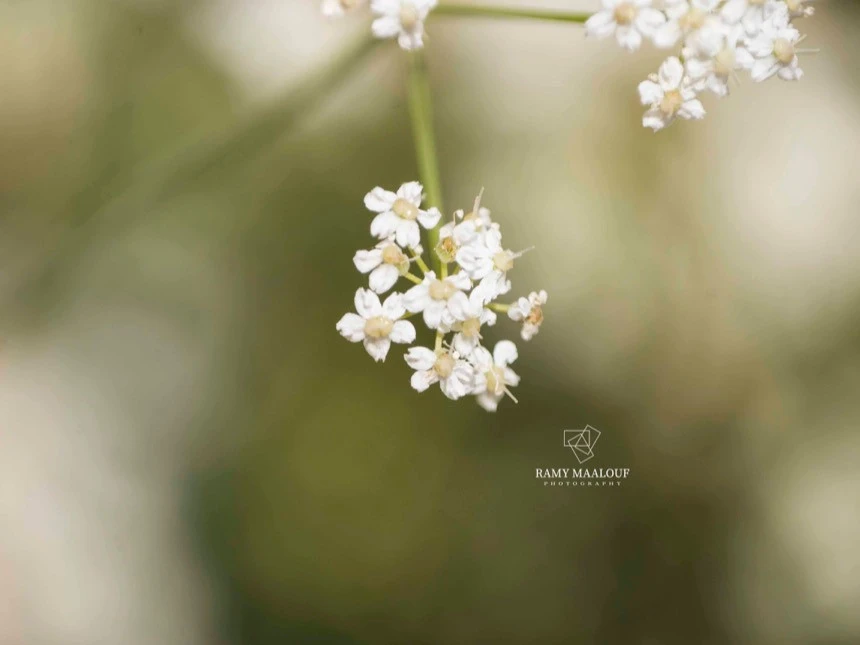
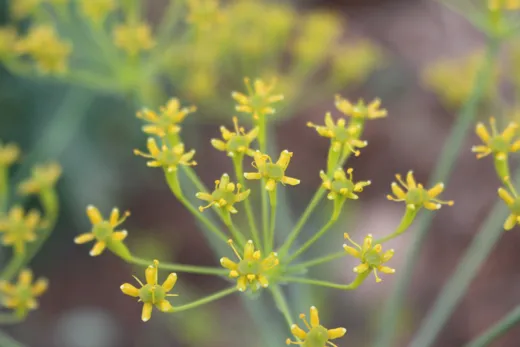
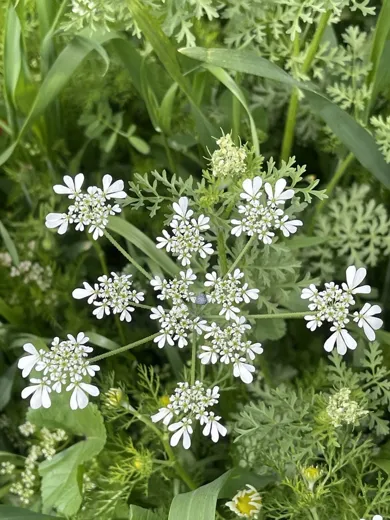
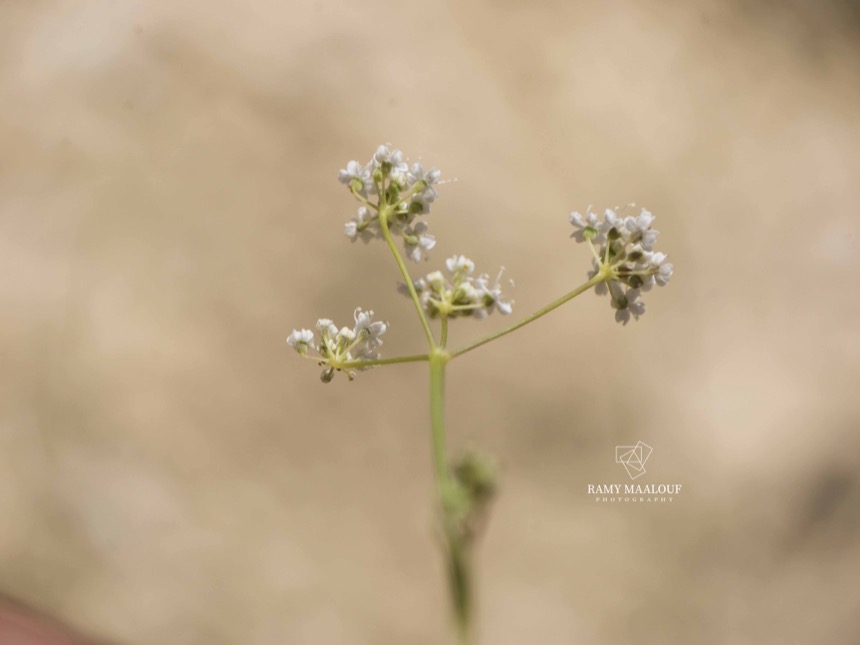
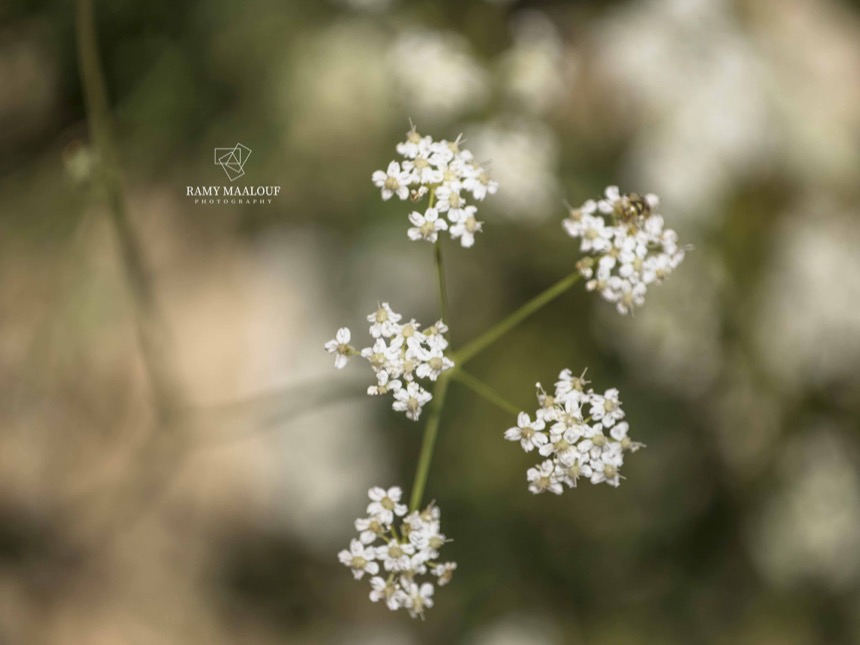
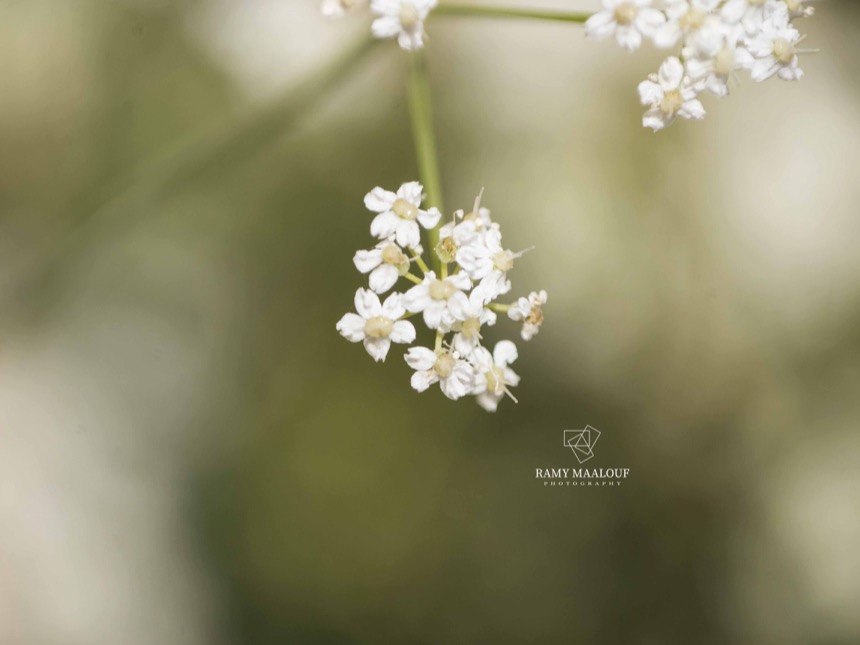
Inflorescence & flowers: Compound umbels terminal, with 10–20 unequal rays; bracts and bracteoles few or absent. Umbellules small, many-flowered. Flowers white, rarely pinkish; petals obovate, inflexed at the tip. Calyx teeth minute; stylopodium conical; styles short, spreading in fruit.
الثمار والبذور
Fruit: Schizocarp ovoid to oblong, 2–3 mm long, laterally compressed, glabrous or slightly scabrid, with five prominent ribs and thin vittae (oil canals) between them.
الموائل والبيئة
Habitat & elevation: Dry grassy slopes, open rocky hillsides, and field margins, often on limestone or marl, between 400 and 1 800 m. Prefers well-drained soils in full sun.
Phenology: Flowers from May to August; fruits mature from July to September.
الانتشار الموثق
Lebanese distribution: Reported by Mouterde from Mount Lebanon and the Beqaa — notably Barouk, Dahr el-Baïdar, Zahlé, and Ras Baalbeck; locally common in submontane and montane steppe zones.
Native to: Albania, Algeria, Baleares, Bulgaria, Central European Russia, East European Russia, France, Greece, Iran, Iraq, Italy, Kazakhstan, Kriti, Krym, Lebanon-Syria, Morocco, North Caucasus, NW. Balkan Pen., Romania, Sicilia, South European Russia, Spain, Transcaucasus, Tunisia, Turkmenistan, Türkiye, Ukraine (POWO).
الارتفاع الموثق
الارتفاع
800 m
لمحة نباتية
بنية النبات
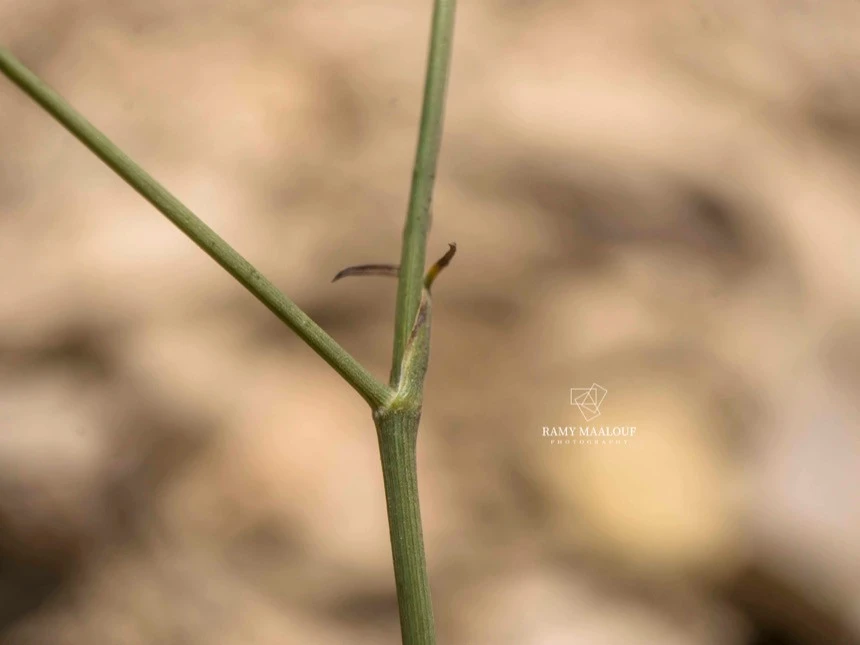
Life-form & habit: Perennial or sometimes biennial herb, 20–60 cm tall, with a slender, branched taproot and erect, finely striate, glabrous or slightly pubescent stems. Base often branched, giving rise to several flowering shoots.