حماض الغنم
حُمَّاض الغَنَم
Rumex acetosella
الفصيلة بطباطية · Polygonaceae
معرض النبات
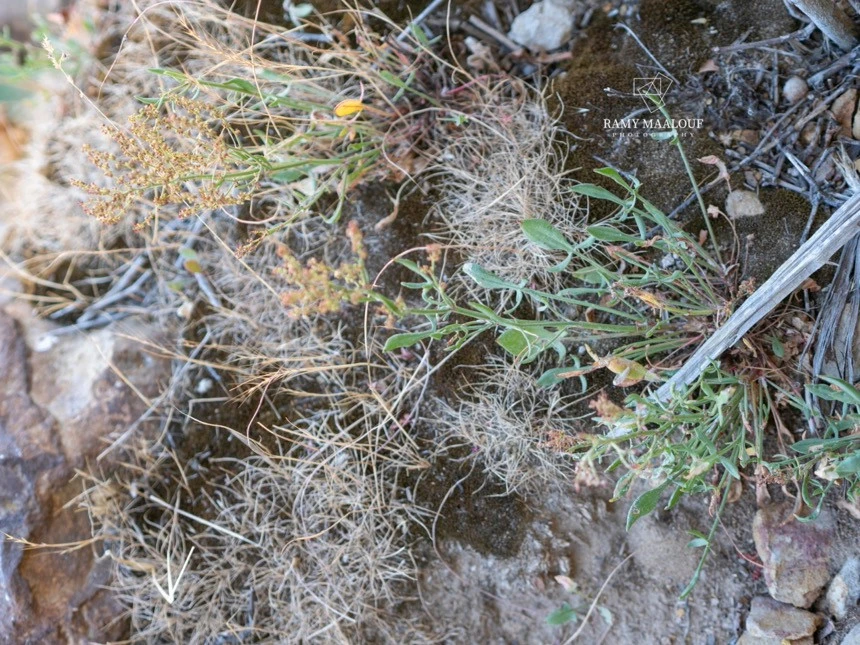
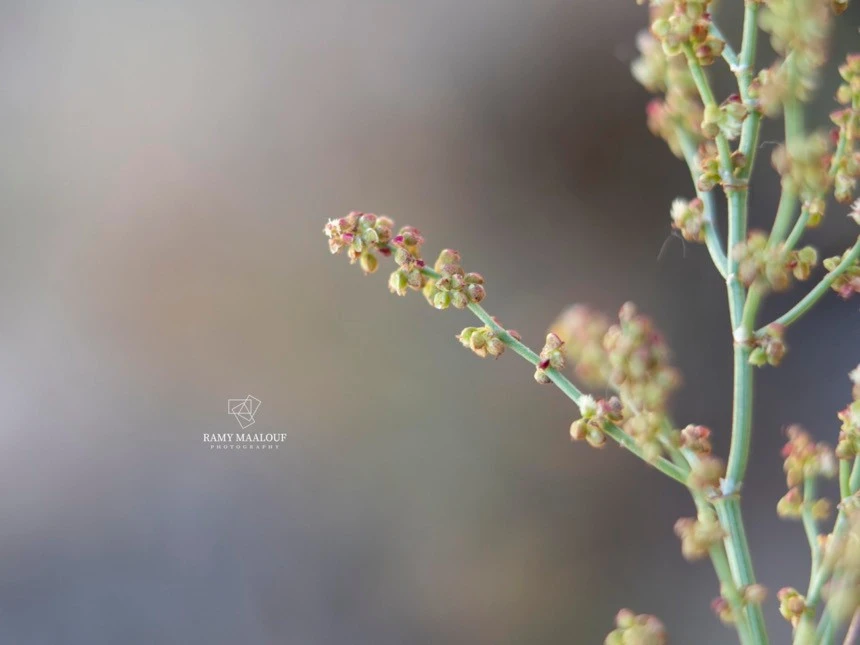
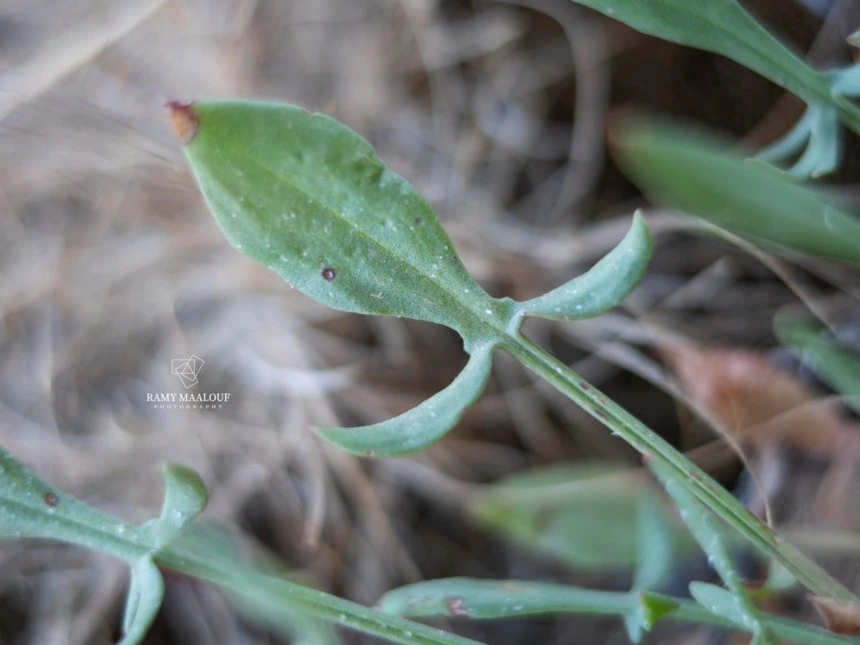
حقوق الصور وإسنادها
- المصدر · الصورة الأصلية
© Ramy Maalouf 2020 - 2026
- المصدر · الصورة الأصلية
© Ramy Maalouf 2020 - 2026
- المصدر · الصورة الأصلية
© Ramy Maalouf 2020 - 2026
- المصدر · الصورة الأصلية
© Ramy Maalouf 2020 - 2026
- المصدر · الصورة الأصلية
© Ramy Maalouf 2020 - 2026
الوصف النباتي
- الأوراق
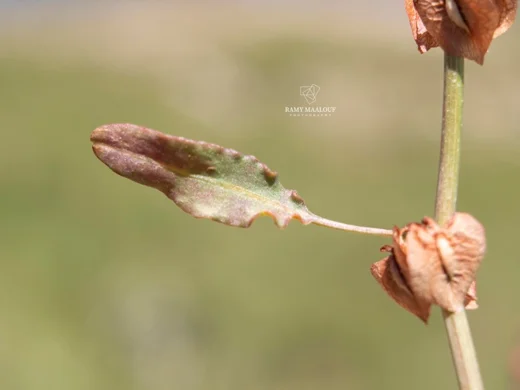
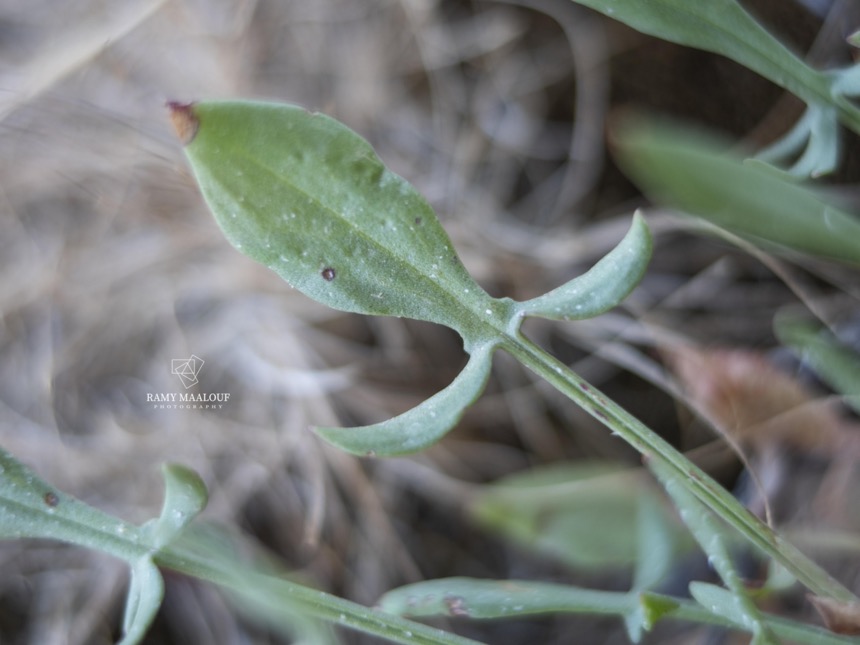
- Leaves: Rosette and stem leaves lanceolate or spear-shaped, the latter with triangular or linear basal lobes. Mouterde notes that regional plants have narrow, consistently spear-shaped leaves. Stipular sheaths papery and silvery, tapering to a lanceolate tip that soon splits and tears.
- الأزهار
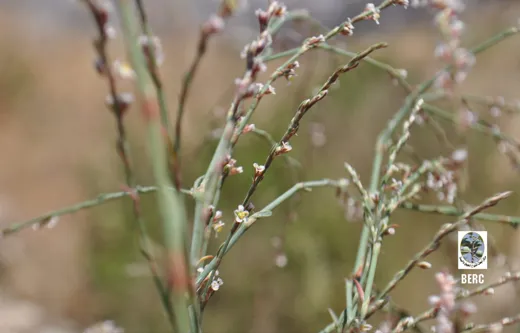
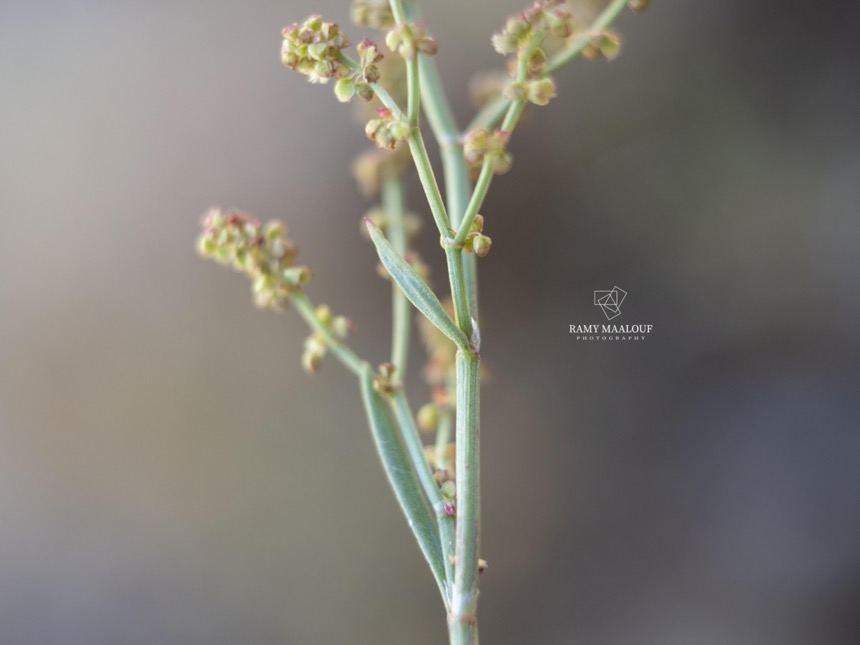
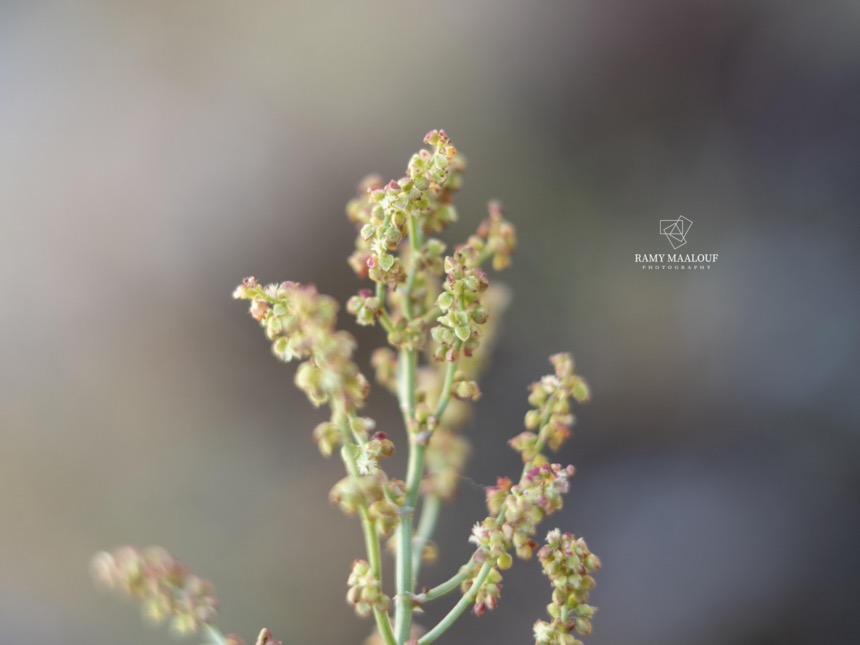
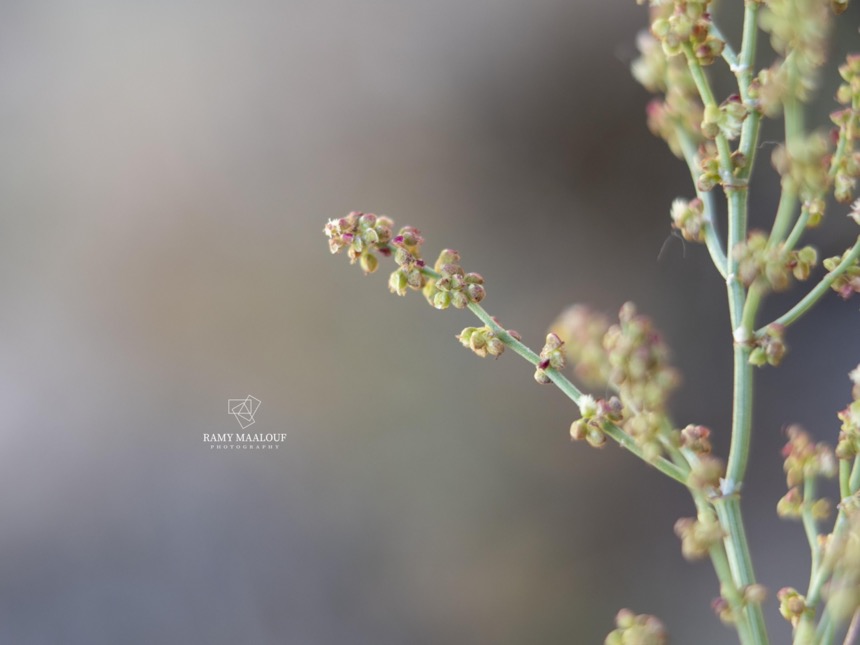
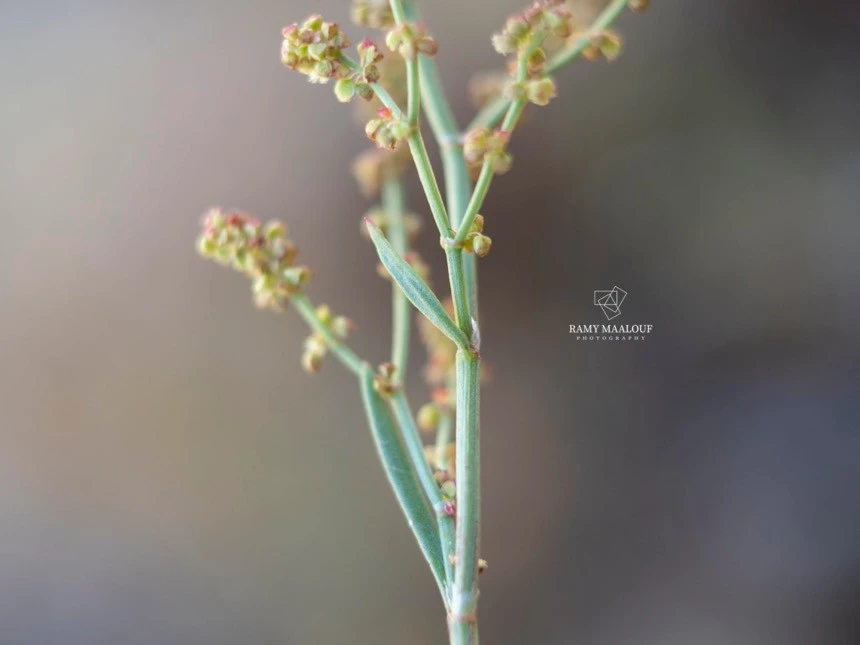
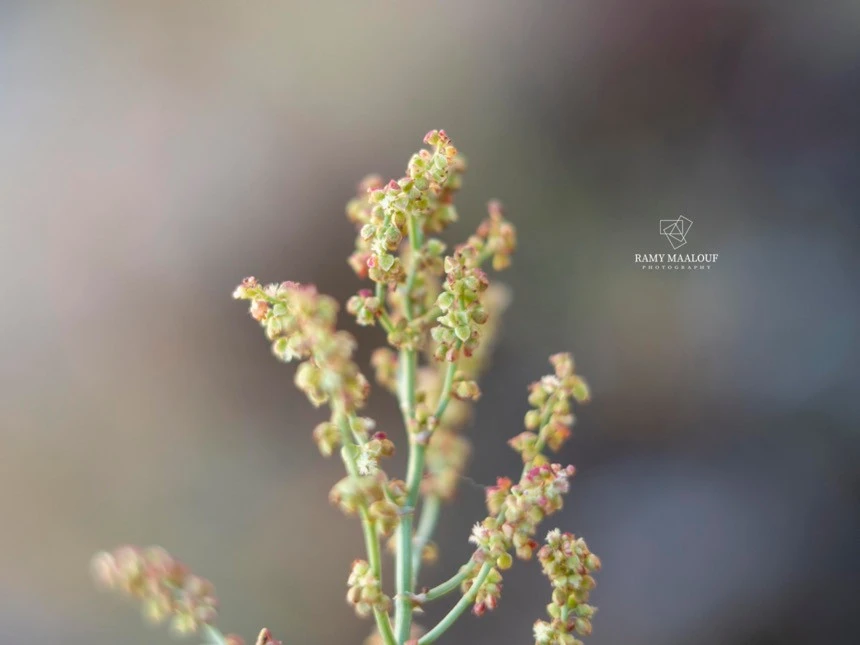
- Inflorescence & flowers: Loose, leafless panicle with rather distant, few-flowered clusters. Male flowers with six similar, equal, blunt tepals and six stamens, often with reddish anthers. In female flowers, the outer tepals lie against the inner valves.
- الثمار والبذور
- Fruit: Fruiting valves do not enlarge and, in Mouterde’s regional account, are not tightly attached to the achene.
الموائل والبيئة
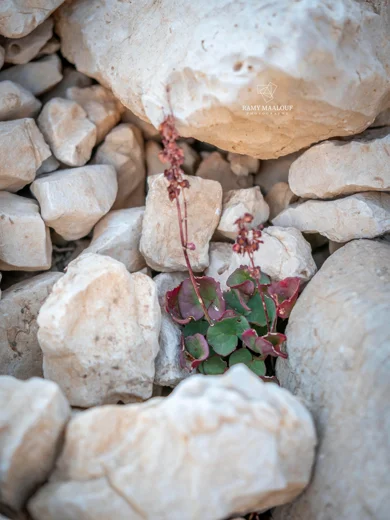
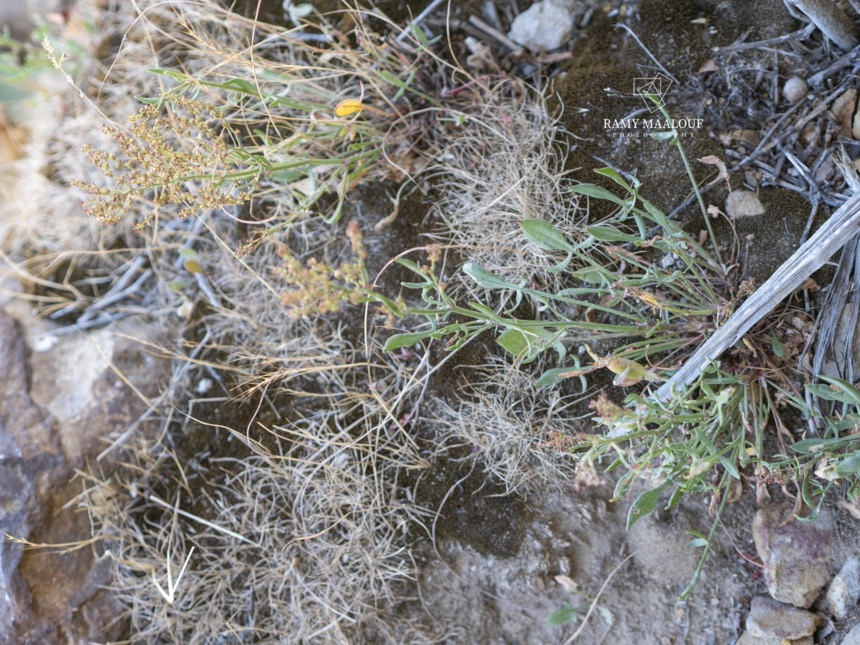
Habitat & elevation: Siliceous ground, especially sandstone.
مواسم النبات
- الفنلوجية
- Phenology: April–June.
الانتشار الموثق
Lebanese distribution: Mayrouba, Beskinta, Dhour Choueir, Afqa, Hadeth, the Cedars of Hadeth, Jourd Hasroun, the Zahle Pass and Khan Sannine.
Recorded locations: Bqaatouta.
Native range: Albania, Algeria, Altay, Amur, Austria, Baltic States, Belarus, Belgium, Bulgaria, Buryatiya, Canary Is., Cape Provinces, Central European Russia, China North-Central, China South-Central, China Southeast, Chita, Corse, Czechia-Slovakia, Denmark, East Aegean Is., East European Russia, Eswatini, Finland, France, Free State, Føroyar, Germany, Great Britain, Greece, Greenland, Hungary, Iceland, Inner Mongolia, Iran, Ireland, Irkutsk, Italy, Kamchatka, Kazakhstan, Khabarovsk, Korea, Krasnoyarsk, Kriti, Kuril Is., KwaZulu-Natal, Lebanon-Syria, Lesotho, Madeira, Magadan, Manchuria, Mongolia, Morocco, Nepal, Netherlands, North Caucasus, North European Russia, Northern Provinces, Northwest European Russia, Norway, NW. Balkan Pen., Poland, Portugal, Primorye, Romania, Sakhalin, Sardegna, Sicilia, South European Russia, Spain, Sweden, Switzerland, Taiwan, Transcaucasus, Tuva, Türkiye, Ukraine, West Himalaya, West Siberia, Xinjiang, Yakutiya.
Introduced into: ... Range Science Herbarium, Las Cruces, New Mexico. Polygonaceae Rumex # Rumex acetosella L. First published in Sp. Pl.: 338 (1753) This species is accepted The native range of this species is Temp. Eurasia. It is a perennial and grows primarily in the temperate biome. It is used to treat unspecified medicinal disorders, as a poison and a medicine and for food. ## Distribution * * KBD ### Native to: Albania, Algeria, Altay, Amur, Austria, Baltic States, Belarus, Belgium, Bulgaria, Buryatiya, Canary Is., Cape Provinces, Central European Russia, China North-Central, China South-Central, China Southeast, Chita, Corse, Czechia-Slovakia, Denmark, East Aegean Is., East European Russia, Eswatini, Finland, France, Free State, Føroyar, Germany, Great Britain, Greece, Greenland, Hungary, Iceland, Inner Mongolia, Iran, Ireland, Irkutsk, Italy, Kamchatka, Kazakhstan, Khabarovsk, Korea, Krasnoyarsk, Kriti, Kuril Is., KwaZulu-Natal, Lebanon-Syria, Lesotho, Madeira, Magadan, Manchuria, Mongolia, Morocco, Nepal, Netherlands, North Caucasus, North European Russia, Northern Provinces, Northwest European Russia, Norway, NW. Balkan Pen., Poland, Portugal, Primorye, Romania, Sakhalin, Sardegna, Sicilia, South European Russia, Spain, Sweden, Switzerland, Taiwan, Transcaucasus, Tuva, Türkiye, Ukraine, West Himalaya, West Siberia, Xinjiang, Yakutiya.
لمحة نباتية
- بنية النبات
- Life-form & habit: Dioecious perennial, with separate male and female plants. Branched rootstock producing both sterile and fertile leaf rosettes. Glabrous, green, glaucous or reddish herb, with erect or ascending stems leafy up to the inflorescence.
- دورة الحياة
- معمرة
الفصيلة والتصنيف
- الاسم العلمي المقبول
- Rumex acetosella
- الفصيلة
- بطباطية