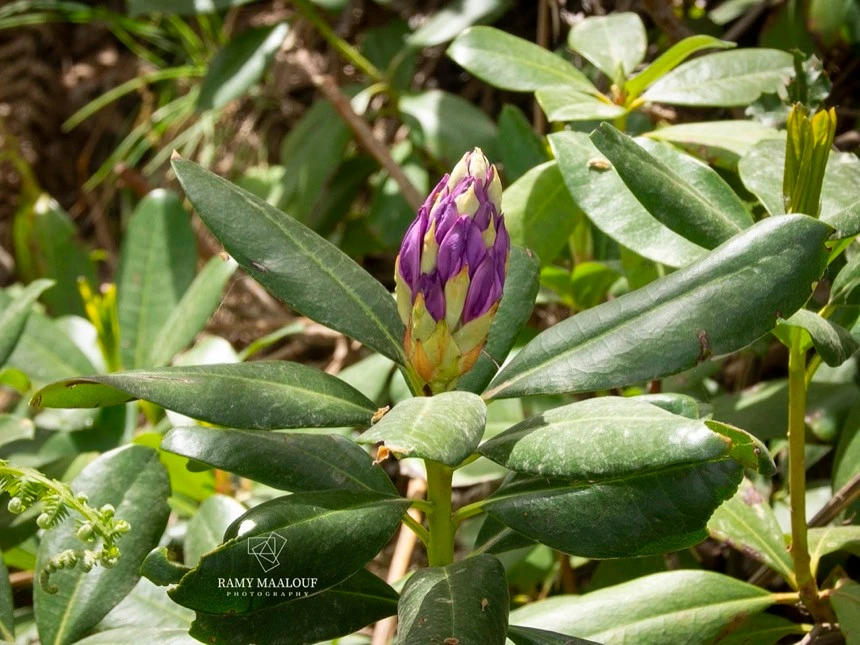
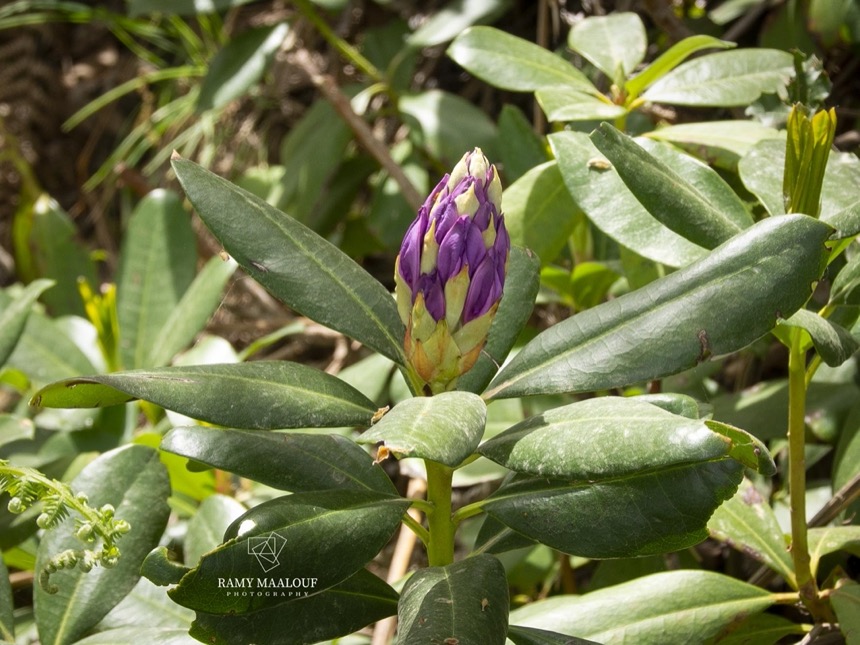
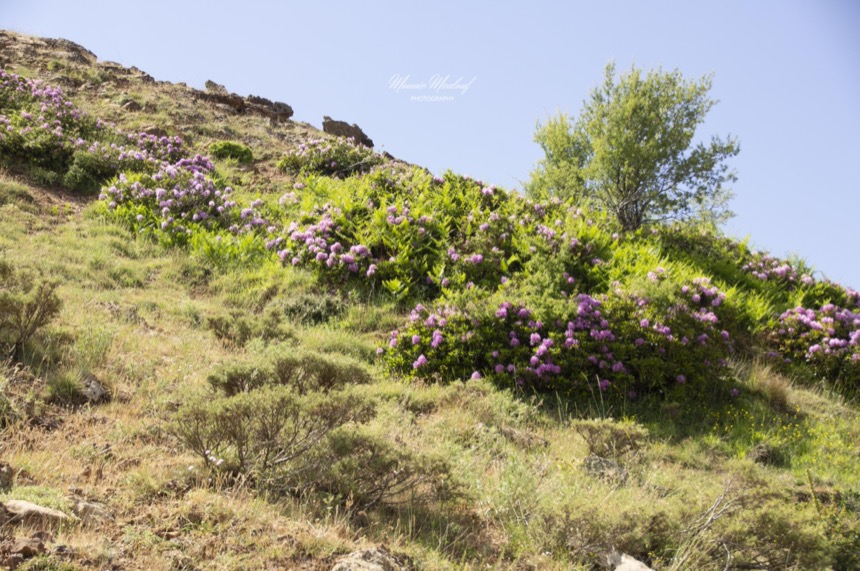
Leaves: Alternate, leathery, oblong to elliptic, 8–18 × 2–5 cm, entire, glabrous and glossy dark green above, paler beneath with scattered brownish hairs along the midrib; petiole 5–10 mm. Persistent for several years, giving the plant a dense evergreen aspect.
الأزهار
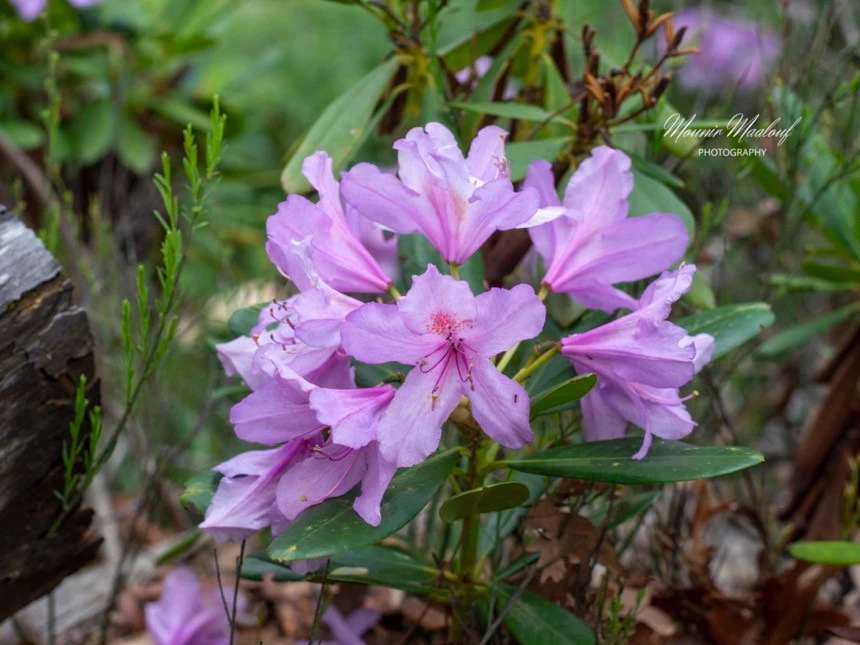
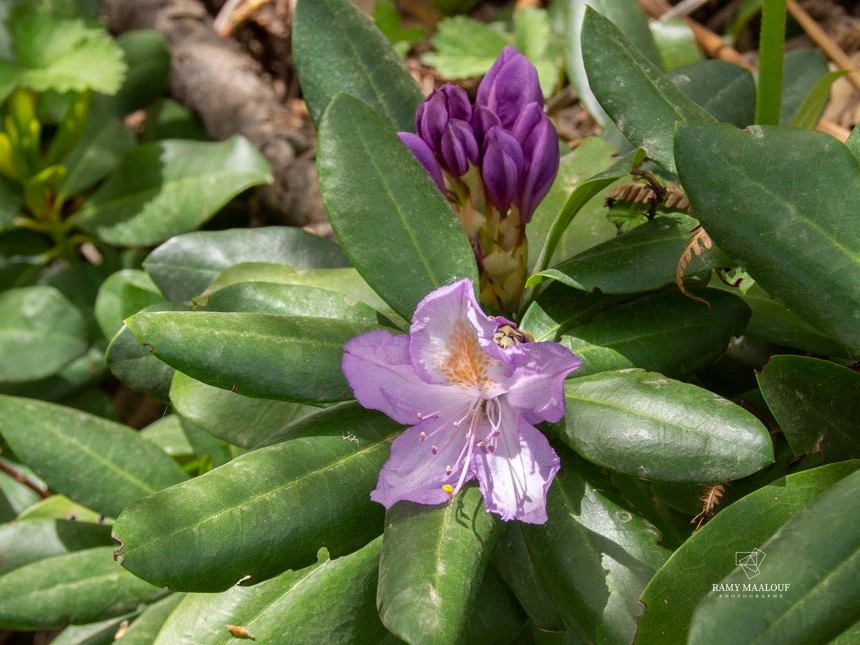
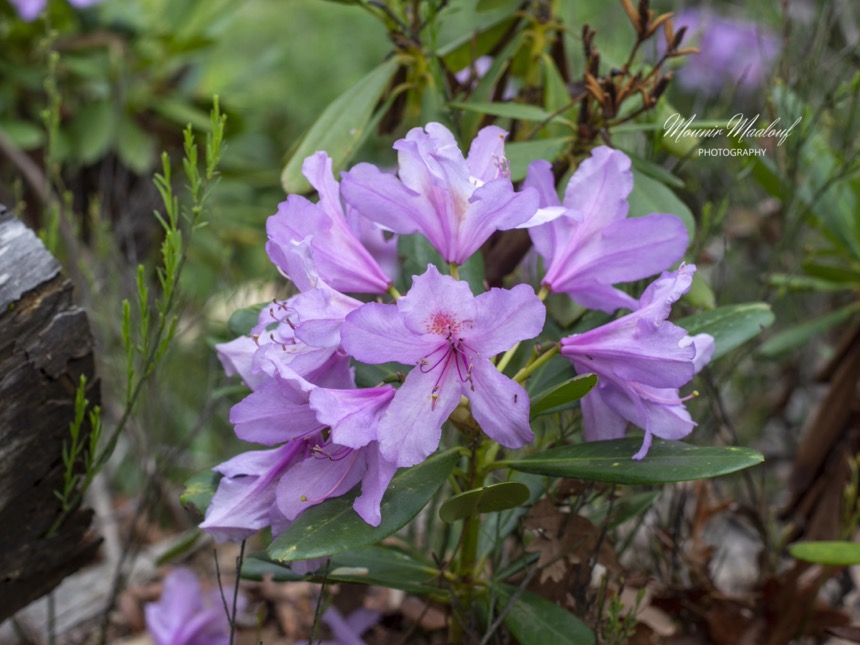
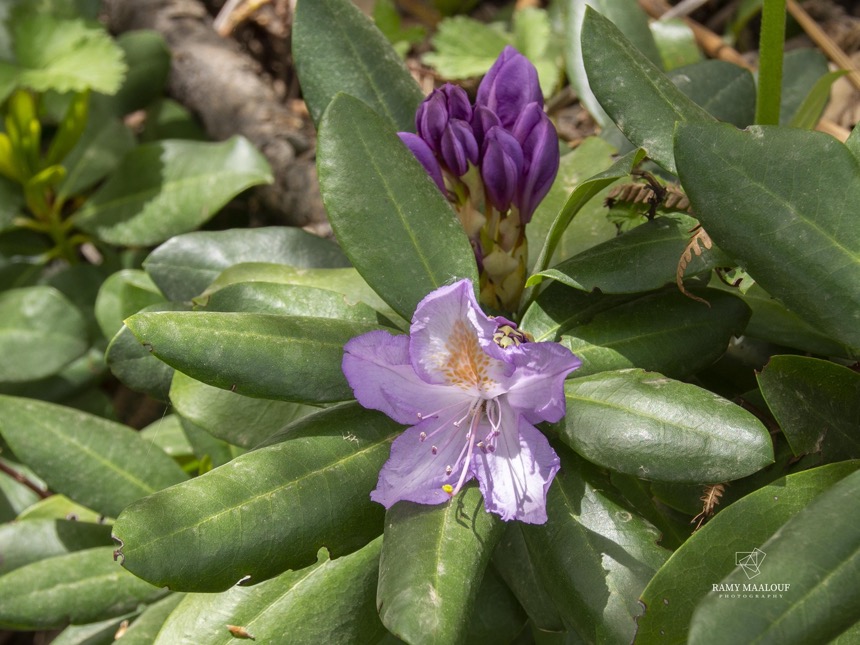
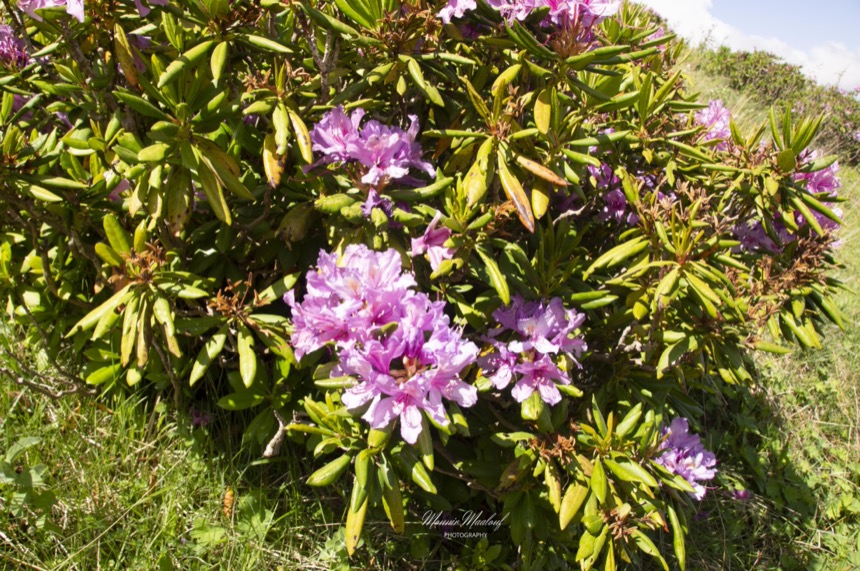
Inflorescence & flowers: Terminal corymbs of 8–20 funnel-shaped flowers, 25–35 mm long. Corolla lilac to deep purplish-pink with a darker blotch on the upper lobe; lobes 5, rounded. Calyx minute, 5-toothed; stamens 10, unequal, exserted; style slender, slightly longer than the corolla.
الثمار والبذور
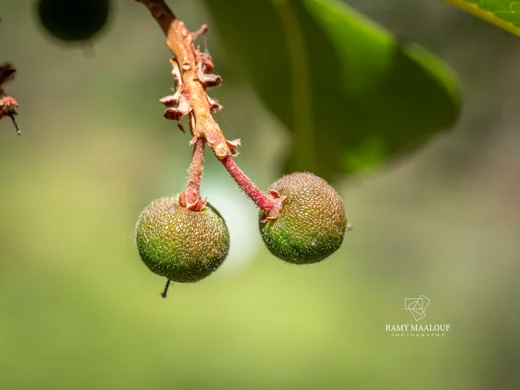
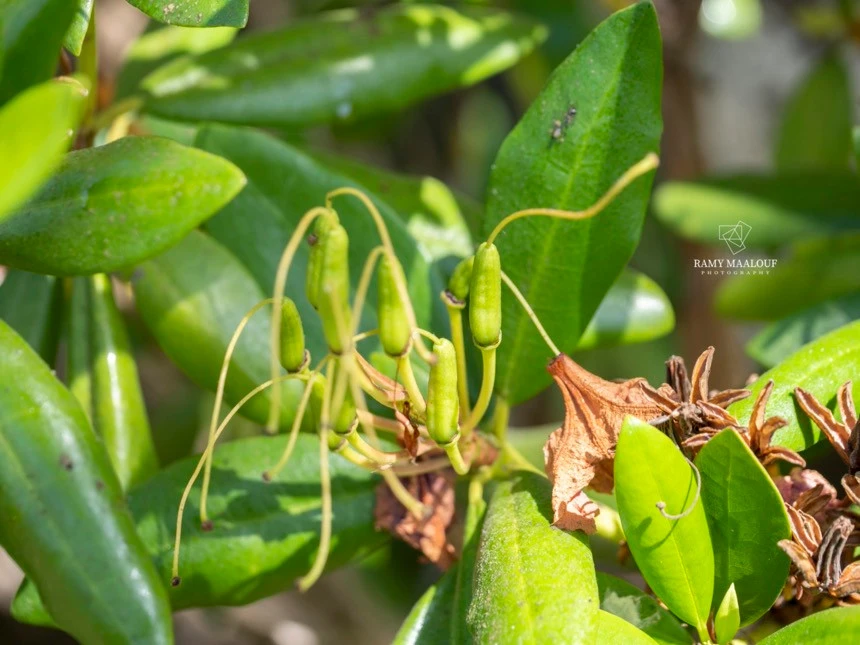
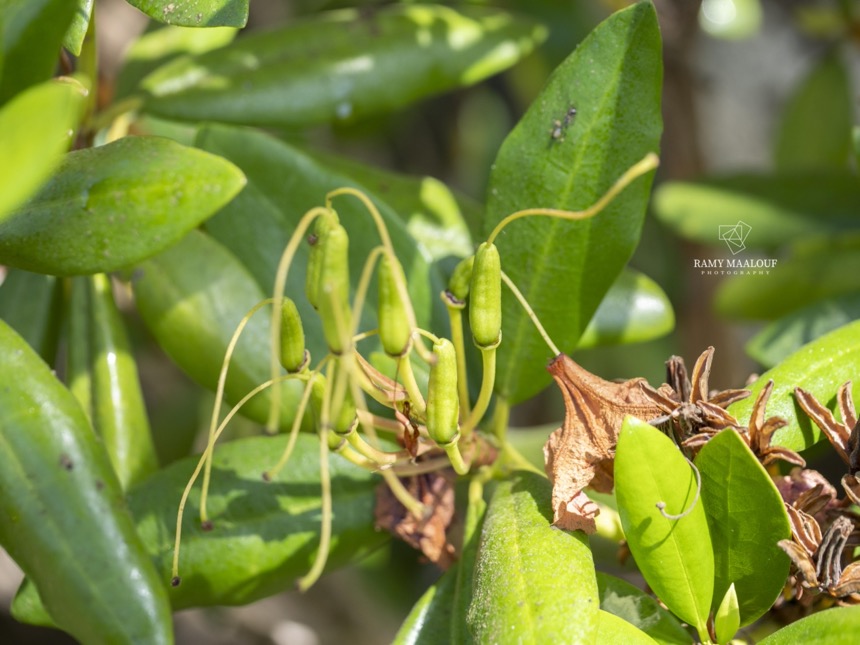
Fruit: Capsule ovoid, 10–15 mm long, pubescent, dehiscing into five valves; seeds numerous, minute, brown, and narrowly winged.
الموائل والبيئة
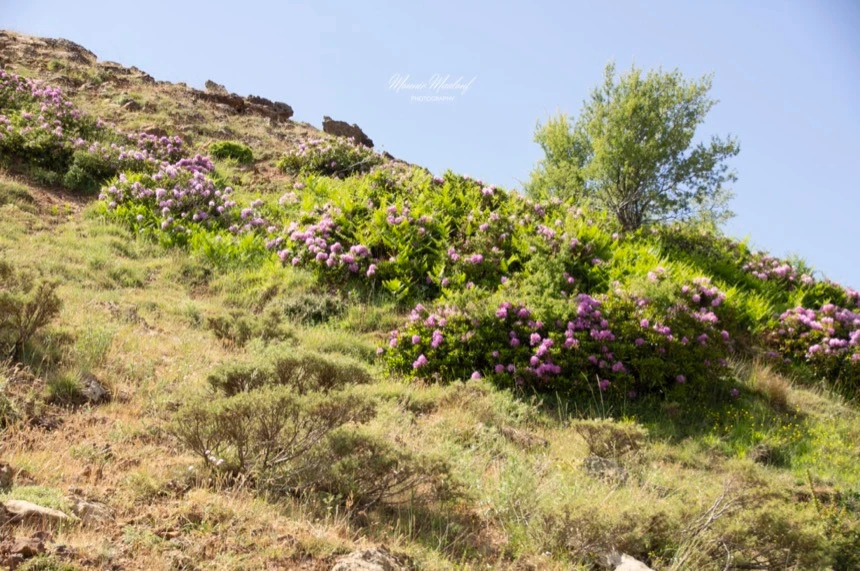
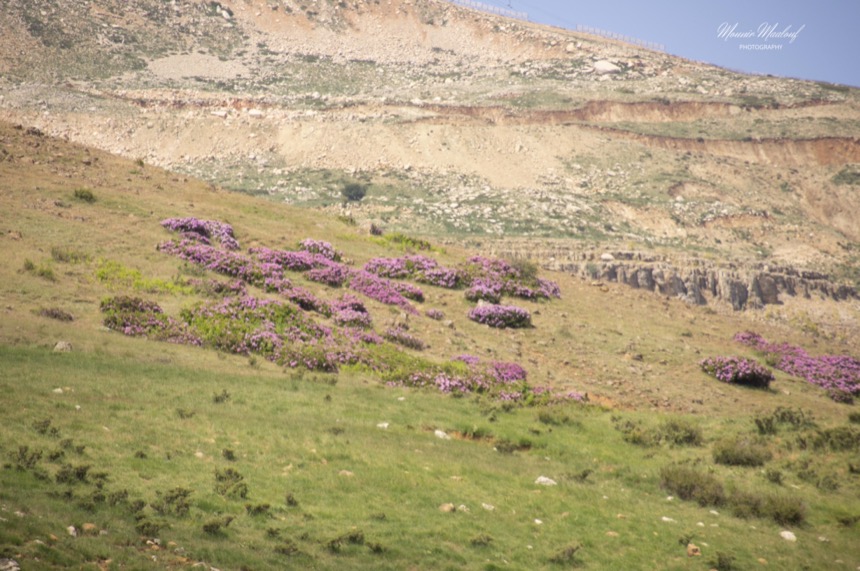
Habitat & elevation: Humid montane forests, ravines, and shaded stream margins, 1 200–2 000 m. Prefers acidic or siliceous soils, under Abies cilicica , Fagus orientalis , or Quercus cerris , often in persistently moist, shaded habitats.
Phenology: Flowers from April to June; fruits ripen in autumn.
الانتشار الموثق
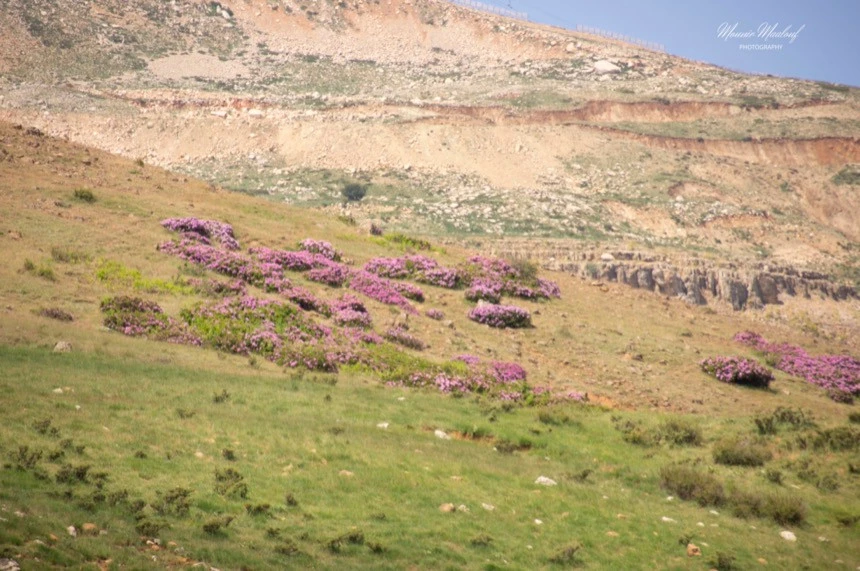
Lebanese distribution: Rare and very localised, known from Ehden , Bcharreh , Tannourine , and Hadeth el-Jebbé in northern Mount Lebanon. Considered by Mouterde (1969) as a relict species of the humid montane flora.
Native to: Bulgaria, Lebanon-Syria, North Caucasus, Transcaucasus, Türkiye, Türkiye-in-Europe (POWO).
Introduced into: Belgium, France, Germany, Madeira, Myanmar, Netherlands (POWO).
الارتفاع الموثق
الارتفاع
000 m
لمحة نباتية
بنية النبات
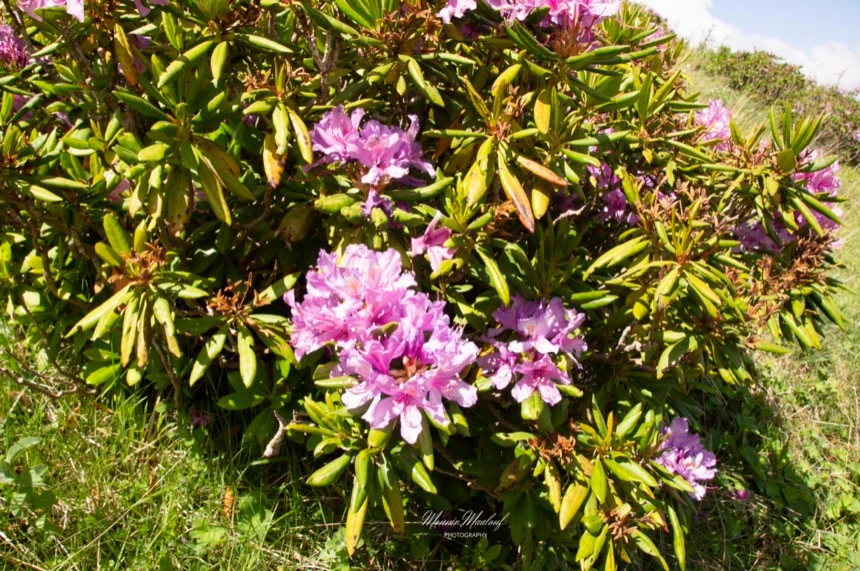
Life-form & habit: Evergreen shrub or small tree, 2–6 m tall, with spreading or ascending branches forming dense thickets. Young twigs pubescent, later glabrescent, reddish-brown, and smooth.