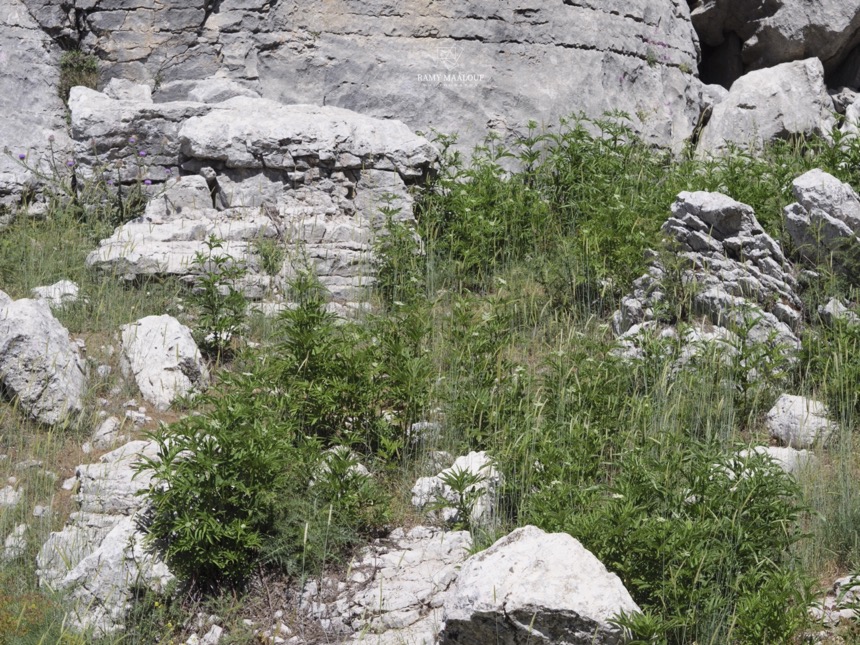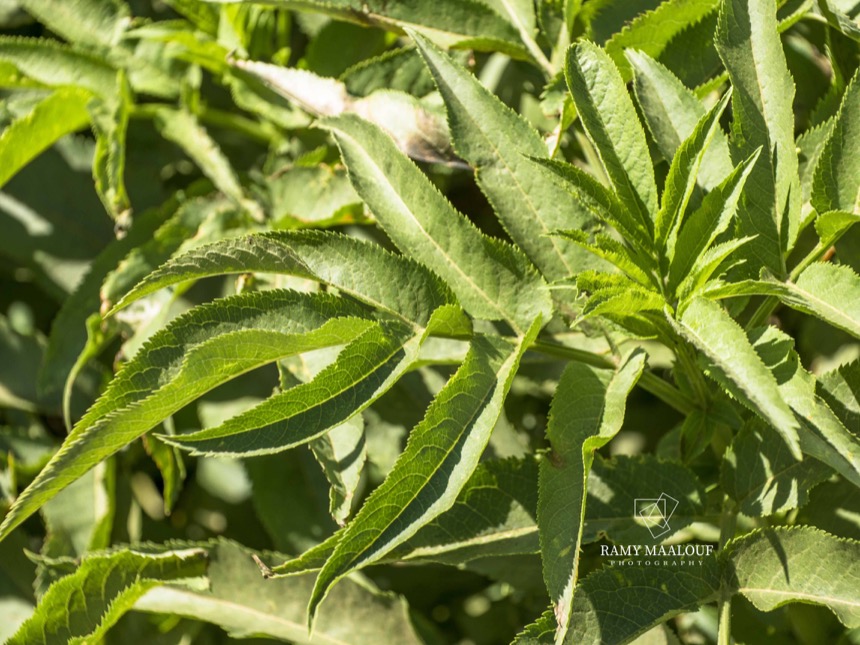
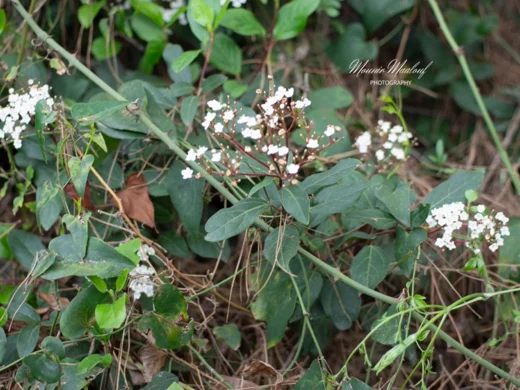
Sambucus ebulus
الفصيلة Viburnaceae
معرض النبات
حقوق الصور وإسنادها
- المصدر · الصورة الأصلية
© Ramy Maalouf 2020 - 2026
- المصدر · الصورة الأصلية
© Ramy Maalouf 2020 - 2026
- المصدر · الصورة الأصلية
© Ramy Maalouf 2020 - 2026
- المصدر · الصورة الأصلية
© Ramy Maalouf 2020 - 2026
- المصدر · الصورة الأصلية
© Ramy Maalouf 2020 - 2026
- المصدر · الصورة الأصلية
Sambucus ebulus L.
الوصف النباتي
- الأوراق
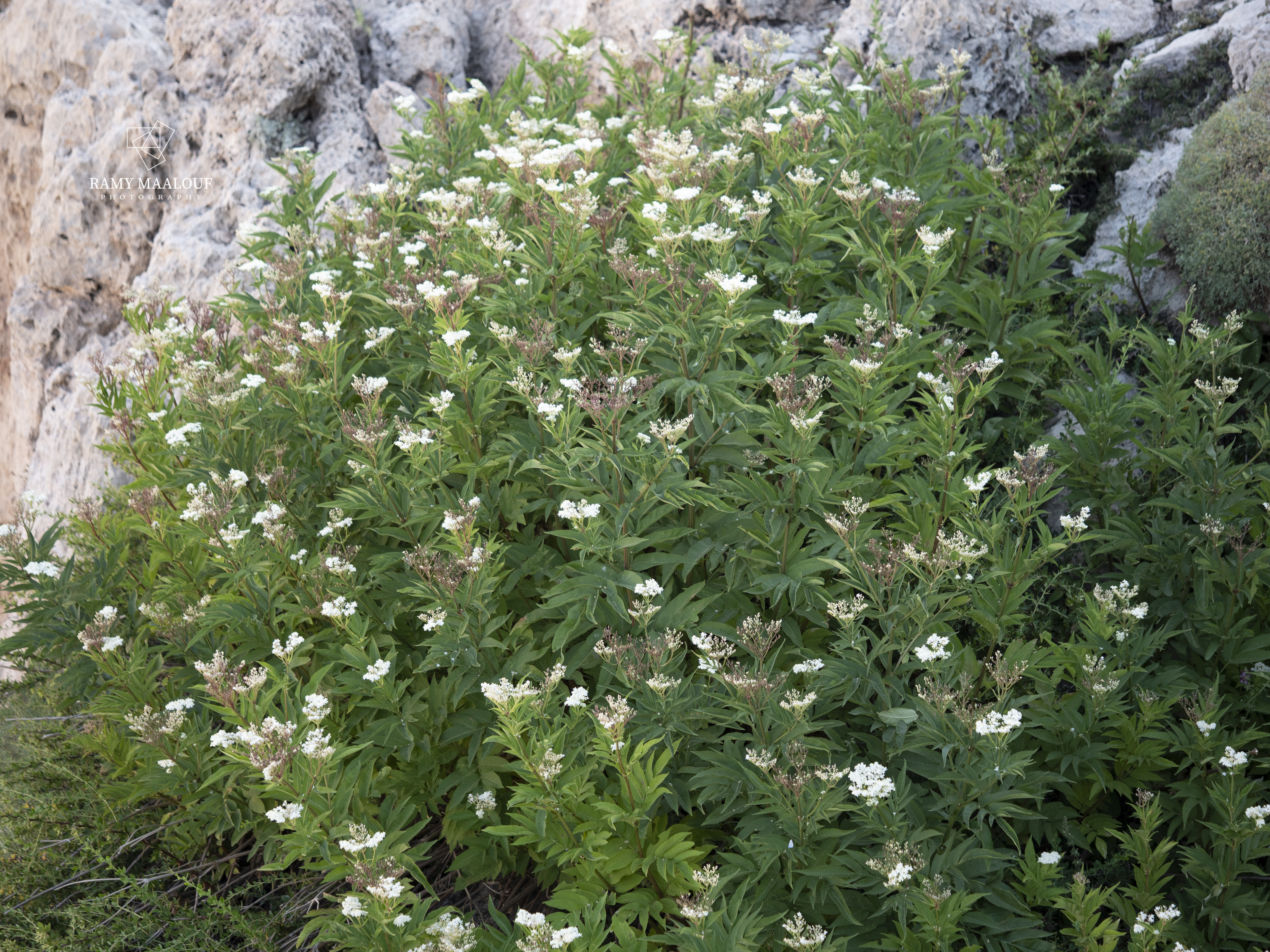
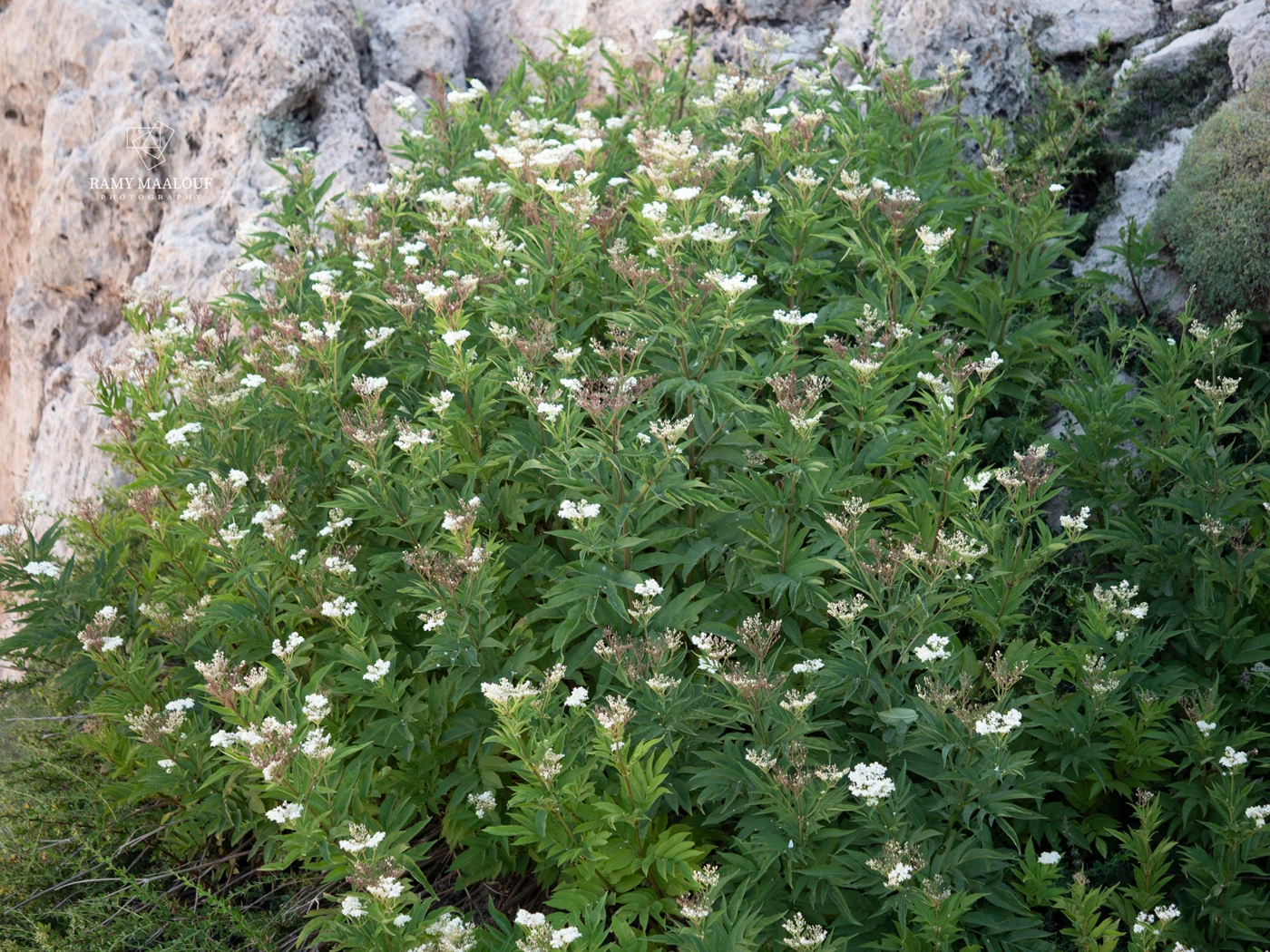
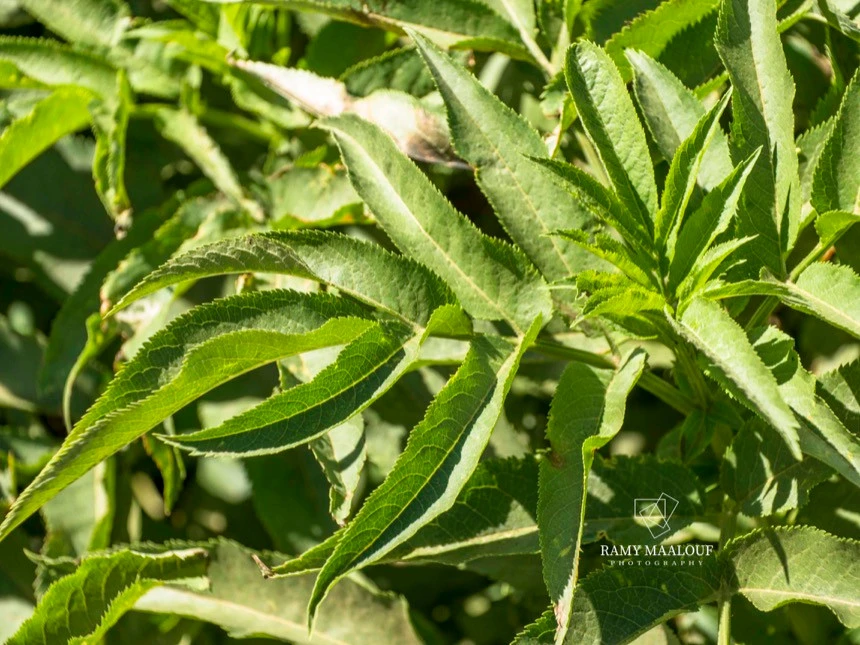
- Leaves: Opposite, pinnate , with 5–11 lanceolate leaflets; margins serrate; upper surface dark green, lower surface paler. Leaflets acute to acuminate.
- الأزهار
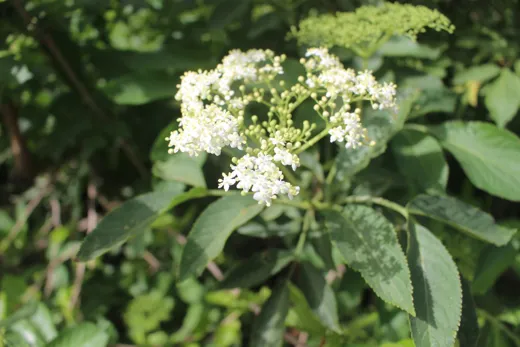
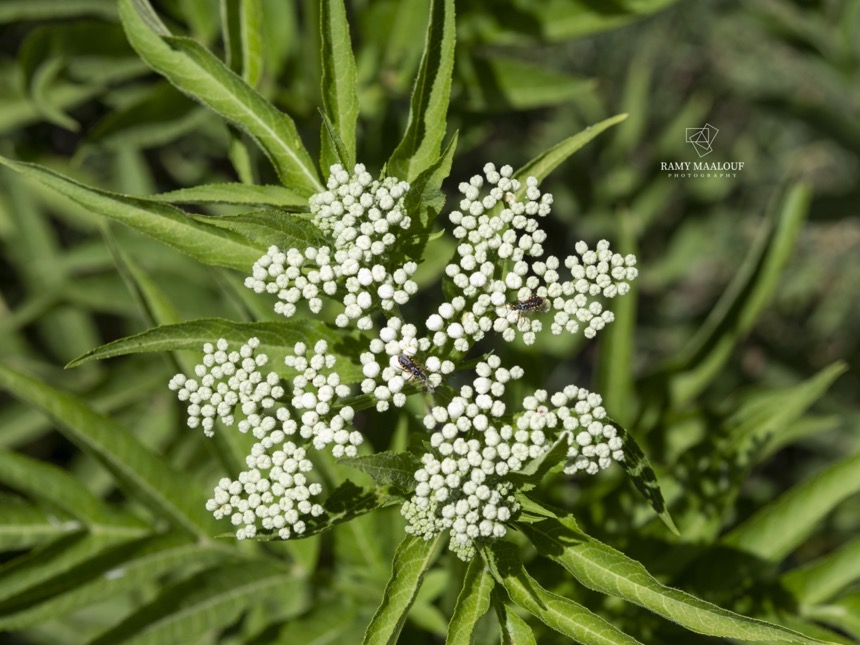
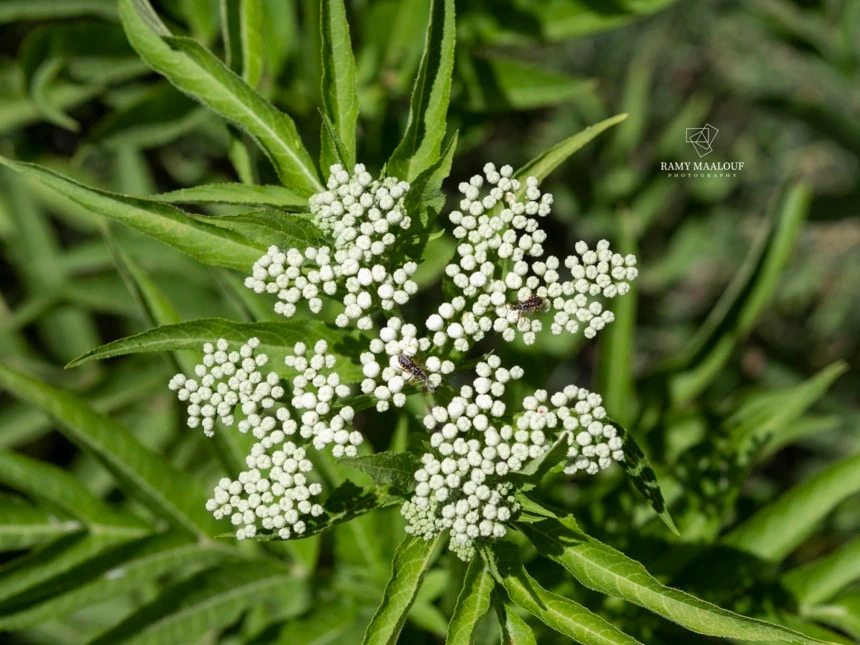
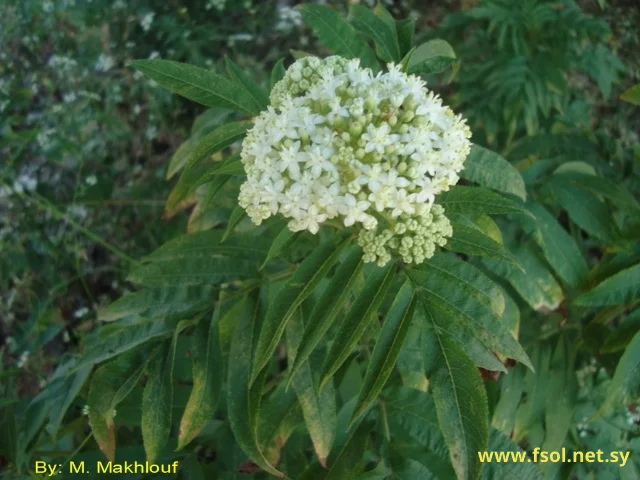
- Inflorescence & flowers: Large compound cymes (flat-topped), 5–12 cm across. Flowers white or tinged with pink; calyx minute; corolla with 5 spreading lobes; anthers often dark violet.
- الثمار والبذور
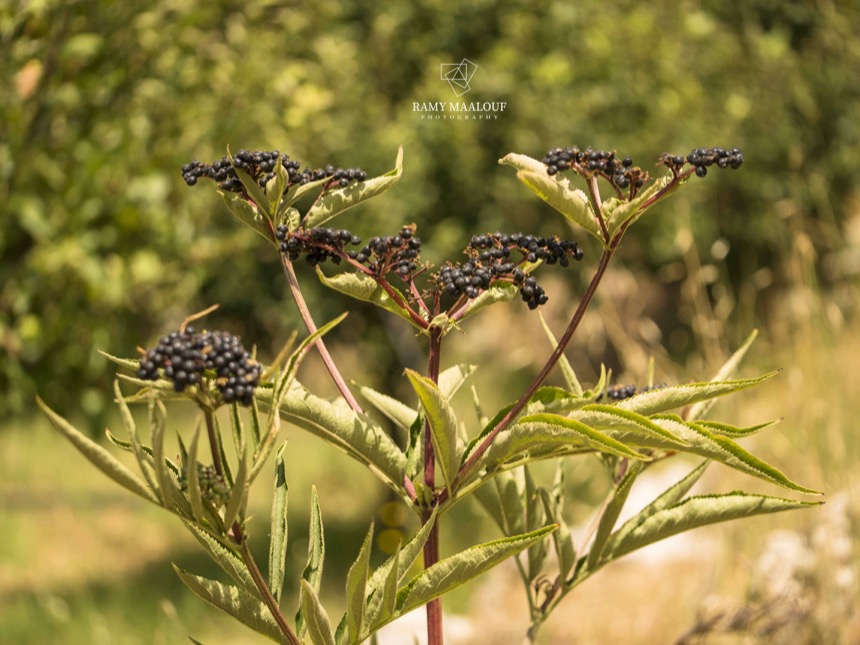
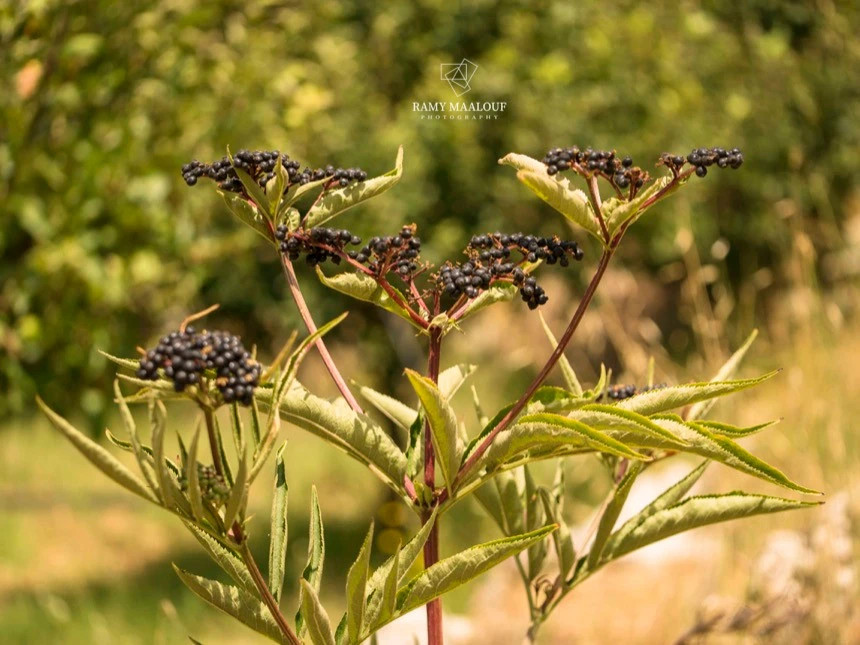
- Fruit: Small glossy black berries (drupes), 3–5 mm, borne in dense clusters; pedicels often reddish. Highly characteristic of the species.
الموائل والبيئة
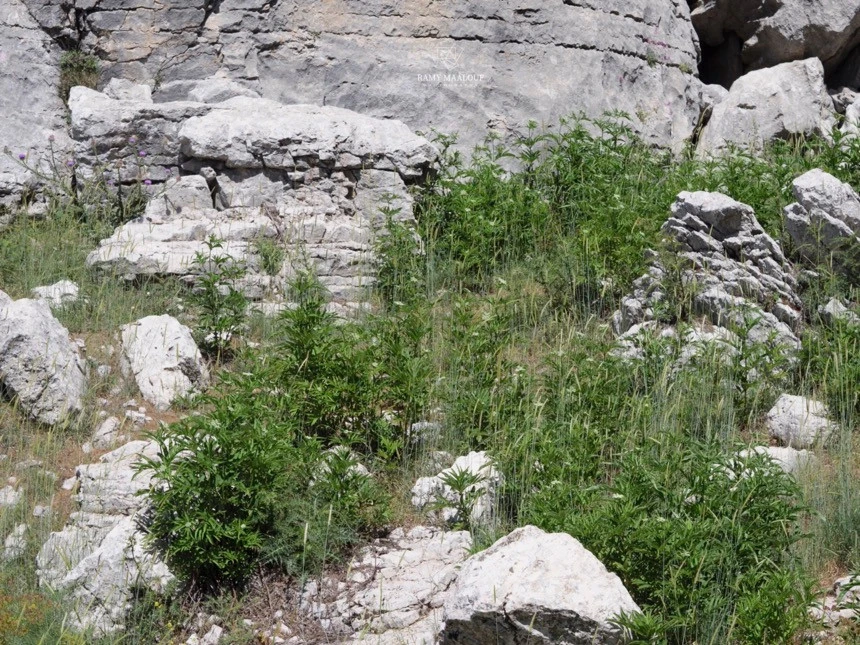
Habitat & elevation: Field margins, roadsides, stream edges, cultivated land, abandoned plots; from the coast to mid-mountain elevations.
مواسم النبات
- الفنلوجية
- Phenology: May – August.
الانتشار الموثق
Lebanese distribution: Widespread. Recorded by Mouterde in Saïda, Beirut, Antélias, Nahr el-Kelb, Tripoli, Jounieh, Baabda, Sin el-Fil, Broummana, Deir el-Qamar, Bikfaya, Zahlé, Chtaura, Ksara, Dahr el-Baïdar, Bcharré, Ehden, Hasroun, and the Cedars.
Native range: Albania, Algeria, Austria, Baleares, Belarus, Belgium, Bulgaria, Central European Russia, Corse, Czechia–Slovakia, France, Germany, Greece, Hungary, Iran, Iraq, Italy, Kriti, Krym, Lebanon, Syria, Madeira, Morocco, Netherlands, North Caucasus, NW Balkan Peninsula, Poland, Portugal, Romania, Sardegna, Sicilia, Spain, Switzerland, Transcaucasus, Tunisia, Turkmenistan, Türkiye, Türkiye-in-Europe, Ukraine (POWO).
Introduced into: Baltic States, Cyprus, Denmark, Great Britain, Ireland, New Jersey, New York, Palestine, Québec, Sweden (POWO).
لمحة نباتية
- بنية النبات
- Life-form & habit: Robust perennial herb (not a shrub), 50–150 cm tall, arising from a creeping rhizome; stems erect, unbranched or little branched, glabrous or slightly pubescent.
الفصيلة والتصنيف
- الاسم العلمي المقبول
- Sambucus ebulus
- الفصيلة
- Viburnaceae