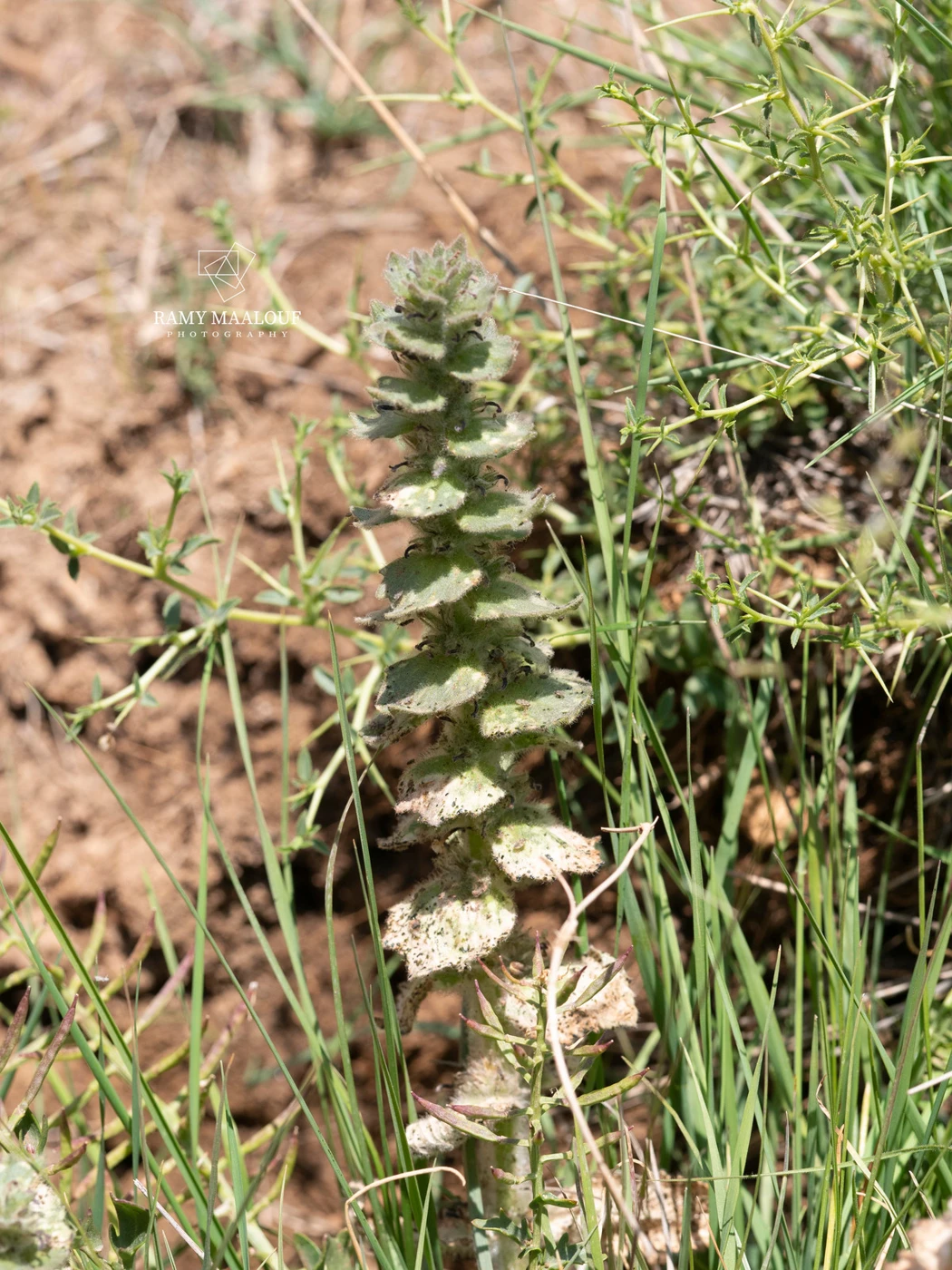
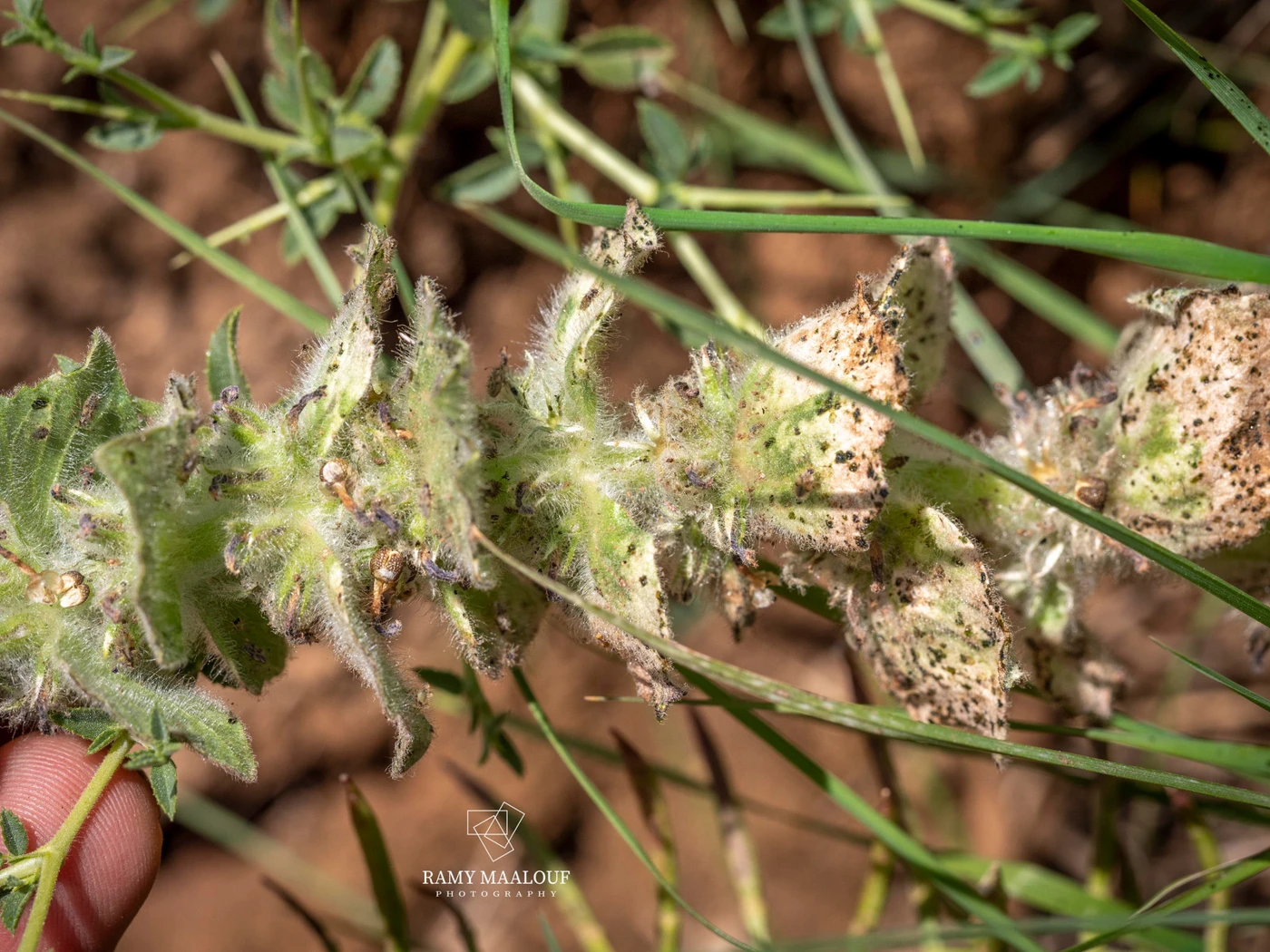
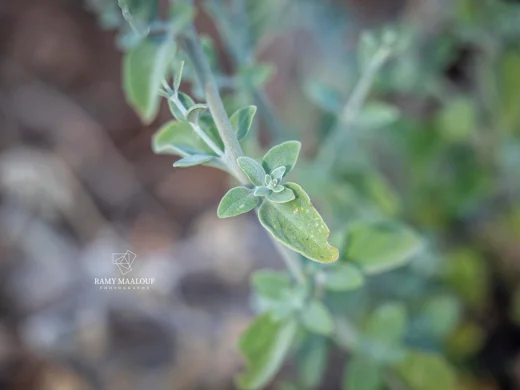
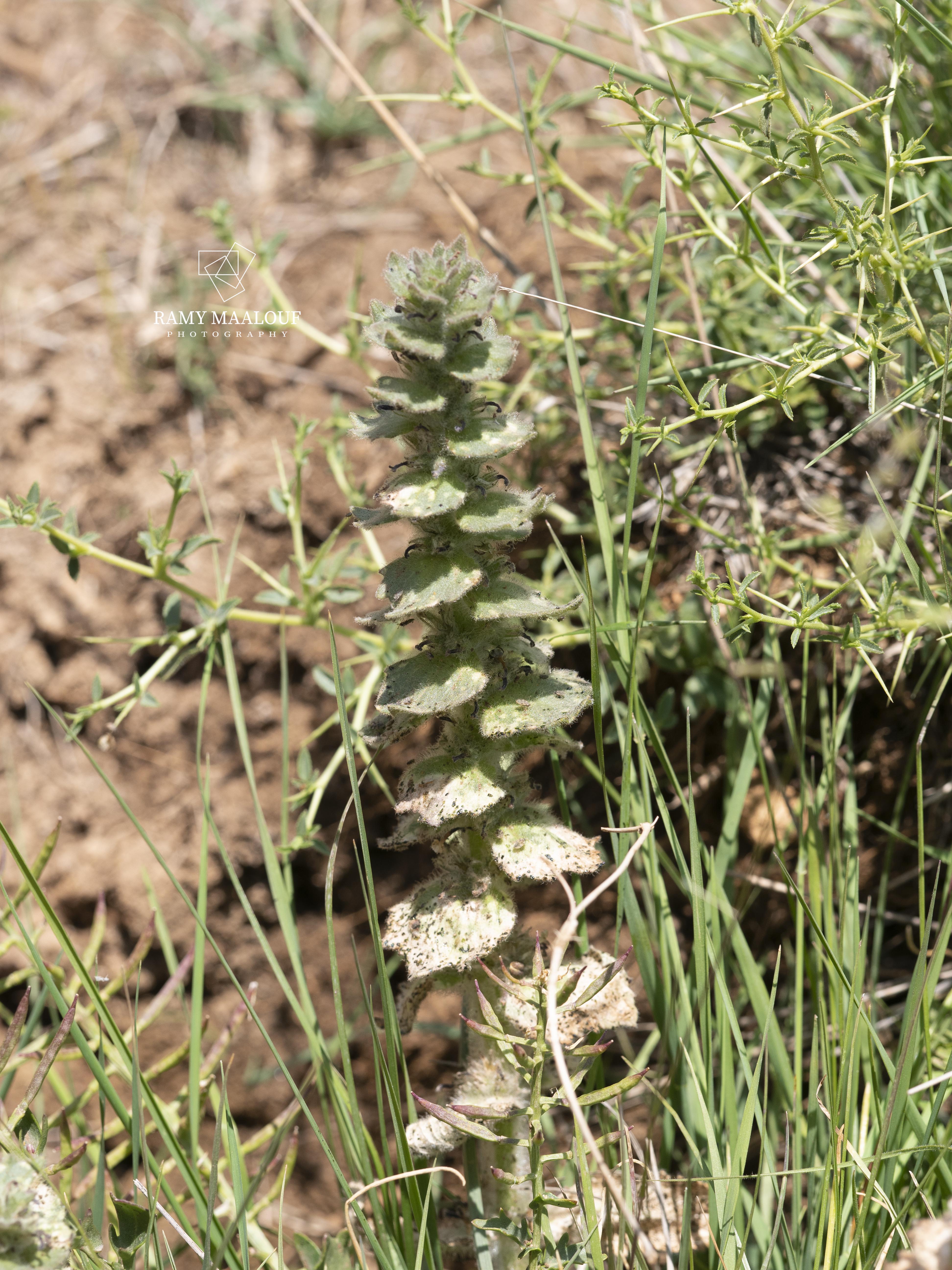
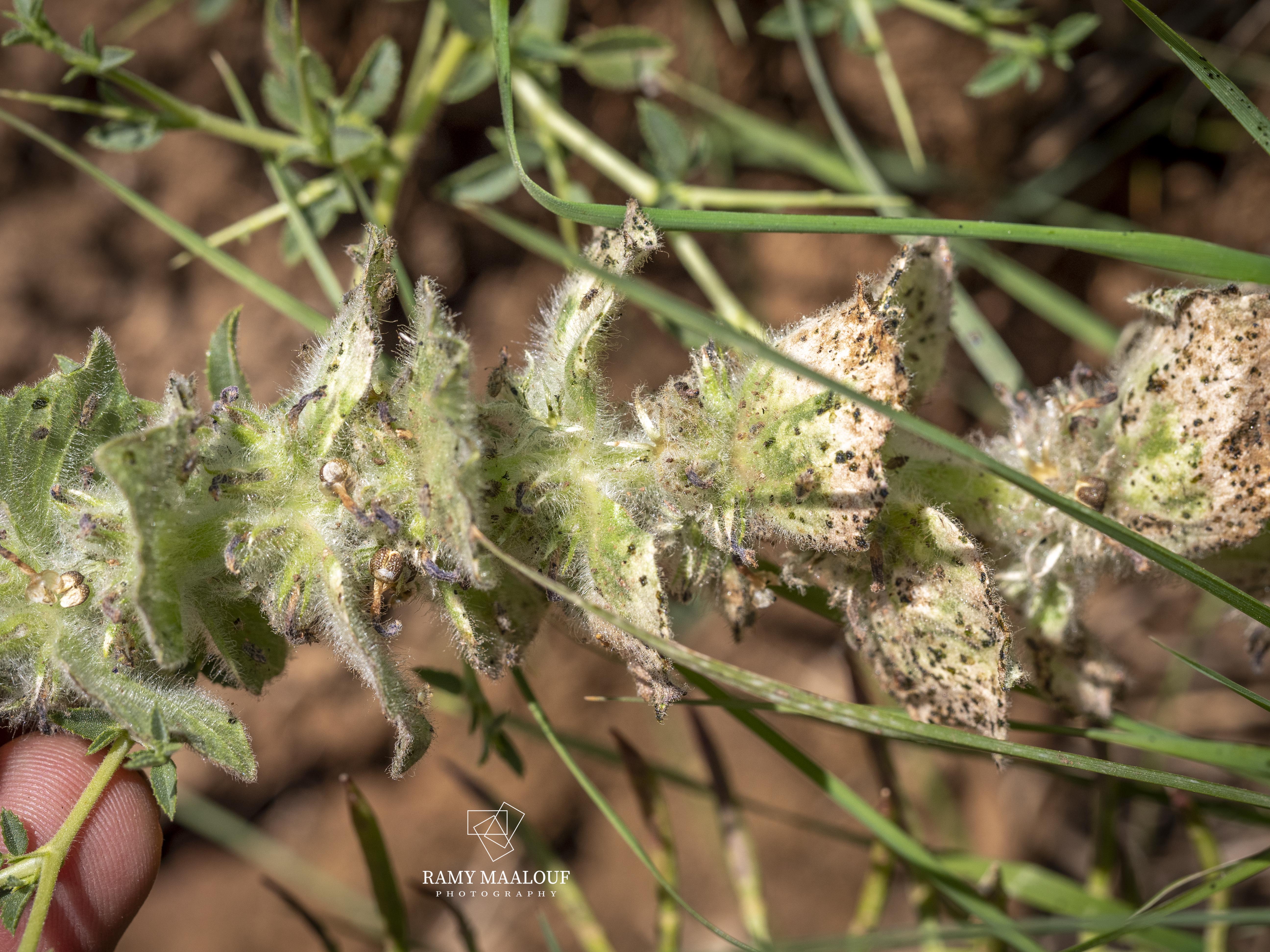
Leaves: Basal leaves forming a small rosette, obovate to spatulate, 2–6 × 1–3 cm, coarsely crenate or dentate, petiolate; cauline leaves opposite, smaller, sessile or subsessile, ovate to lanceolate, margins entire or slightly toothed. Both surfaces softly pubescent, especially along veins.
الأزهار
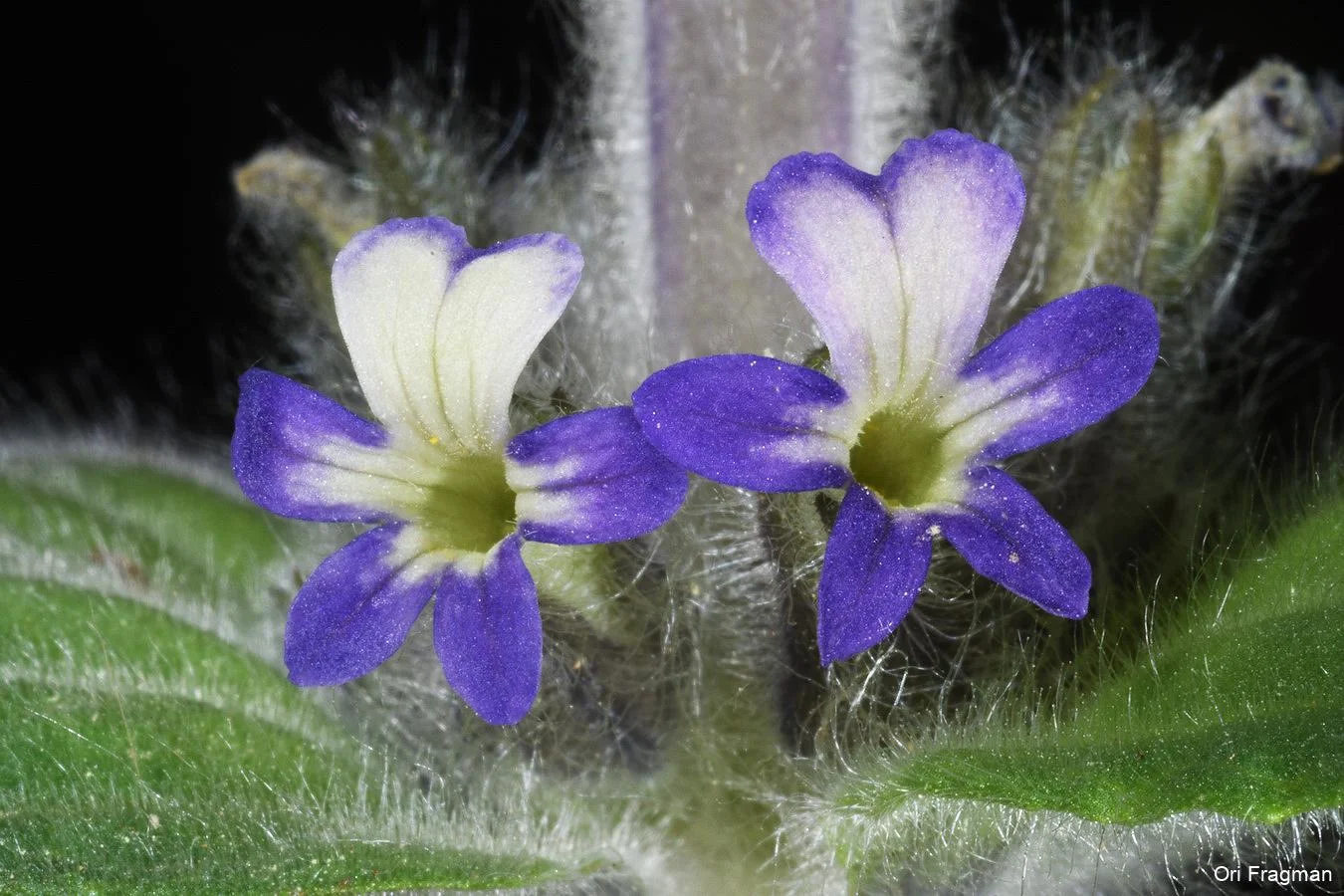
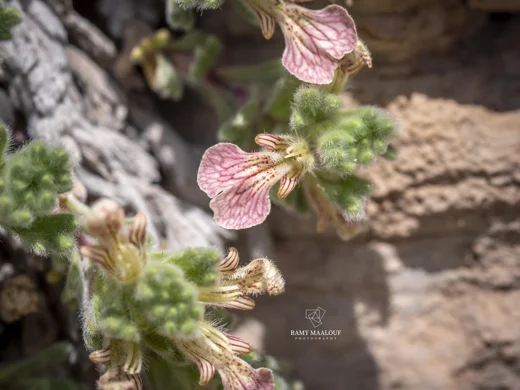
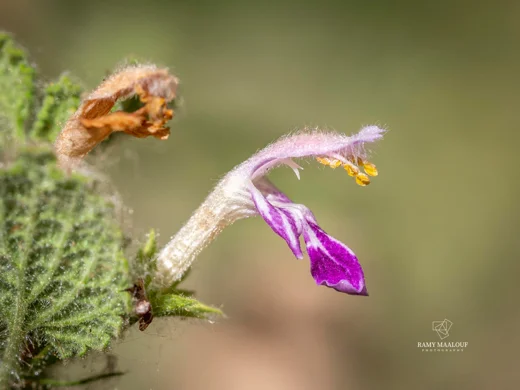
Inflorescence & flowers: Terminal spike-like inflorescence dense and many-flowered. Bracts ovate, often tinged purple, exceeding the calyx. Calyx tubular-campanulate, 4–5 mm long, with 5 subequal, triangular lobes. Corolla bilabiate, blue to violet (rarely pinkish), 10–15 mm long; upper lip short and bifid, lower lip trilobed with a large central lobe marked by darker veins. Stamens 4, exserted; filaments hairy below the anthers.
الثمار والبذور
Fruit: Nutlets obovoid, smooth and shiny, brownish, 1.5–2 mm long; persistent calyx enclosing the fruit.
الموائل والبيئة
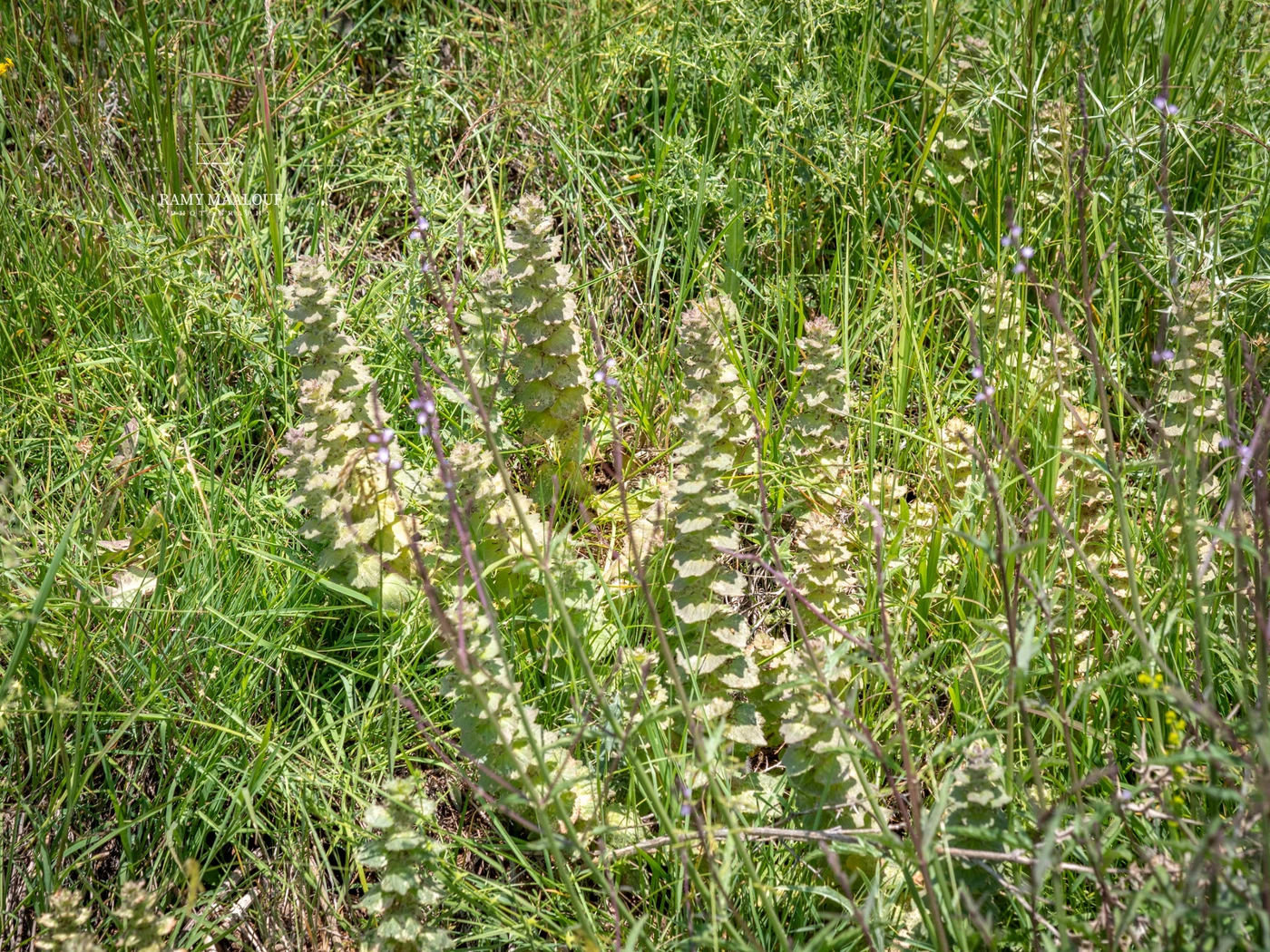
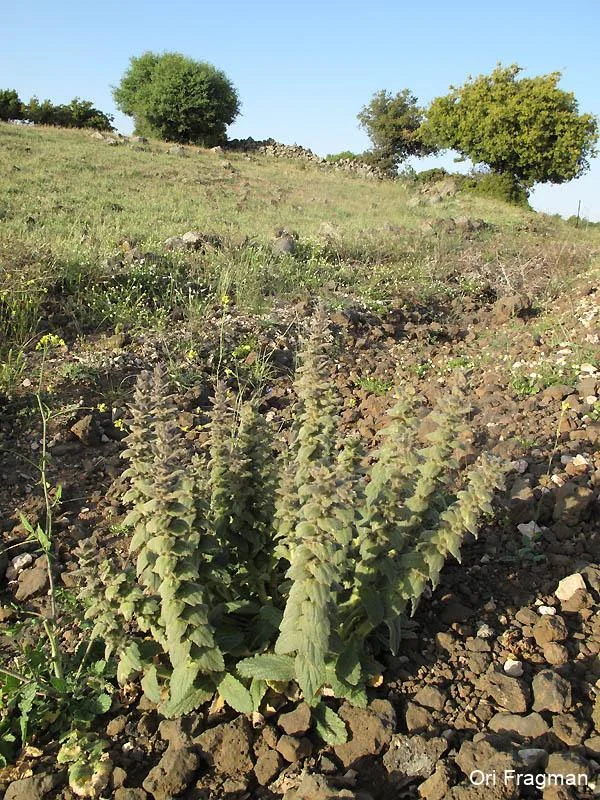
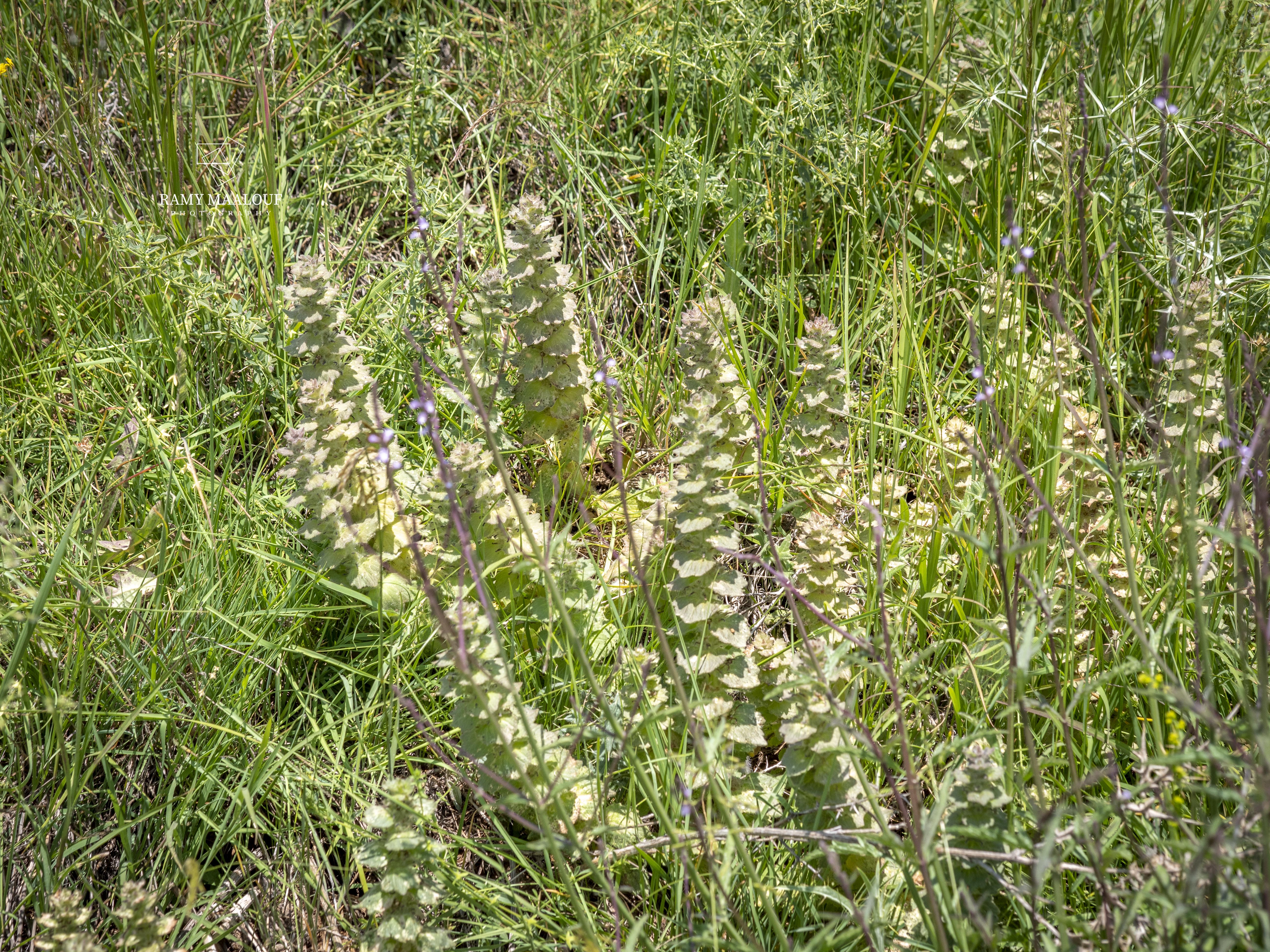
Habitat & elevation: Rocky slopes, forest margins, and grassy hillsides, often on limestone, from 500 to 2 000 m. Prefers semi-shaded to open habitats with moderate moisture.
Phenology: Flowers from March to May; fruits mature from May to July.
الانتشار الموثق
Lebanese distribution: Common in montane and submontane regions of Mount Lebanon — notably Barouk, Ain Zhalta, Dahr el-Baïdar, and Ehden; locally abundant in cedar and oak woodland clearings.
Native to: Albania, Cyprus, East Aegean Is., Greece, Iran, Italy, Kriti, Krym, Lebanon, Syria, North Caucasus, Palestine, Sicilia, Transcaucasus, Türkiye, Türkiye-in-Europe, Ukraine (POWO).
الارتفاع الموثق
الارتفاع
000 m
لمحة نباتية
بنية النبات
Life-form & habit: Perennial herb, 10–30 cm tall, with a short rhizome and ascending to erect stems, usually simple or weakly branched. Stems quadrangular, pubescent with appressed or spreading hairs.، نبات تبقى براعم تجديده عند سطح التربة
دورة الحياة
معمرة
الفصيلة والتصنيف
الاسم العلمي المقبول
Ajuga orientalis
الفصيلة
شفوية
من تاريخ الاستعمال الطبي
روايات استعمال تقليدي؛ لا تُعد دليلًا على فعالية سريرية أو توصية علاجية.